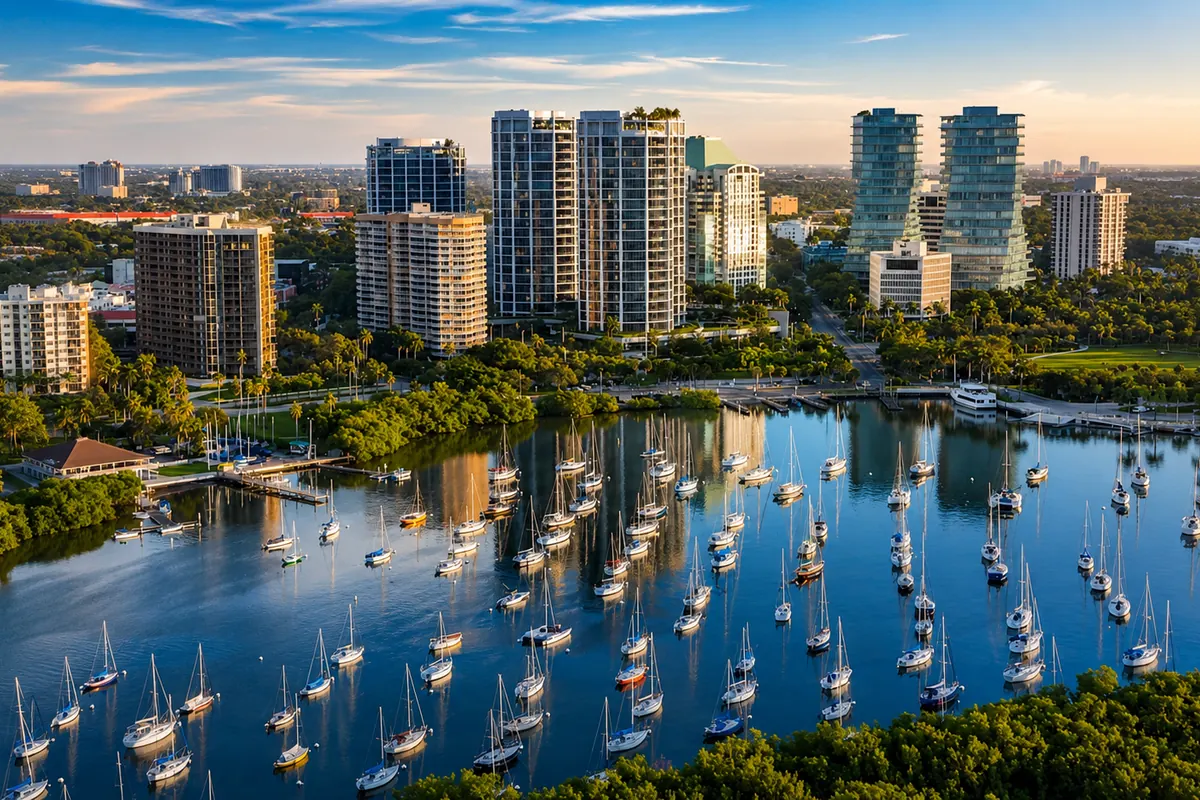
Coconut Grove homes and condos, with up to 50% of our buyer-agent commission back.
Bayfront estates, canopy streets, land, townhomes and luxury condominiums. Get independent buyer representation and, when eligible, up to 50% of our buyer-agent commission back at closing.
What could you keep on a Coconut Grove purchase?
The Grove runs from a village-core condominium to a bayfront estate. The slider covers the whole range — move it to yours.
Illustration only — not a quote and not a guarantee. Compensation varies by listing and by transaction, and not every purchase makes buyer-agent compensation available. Any actual rebate depends on the compensation actually received, your buyer-representation agreement, lender approval of credits, and closing terms. We confirm the figure in writing before you commit.
Looking at a new-development residence or a builder-owned house? Talk to us before you register or tour — here's why.
Miami's oldest neighbourhood, and still its most self-contained one.
Coconut Grove predates the City of Miami — the City's own zoning code says so, in the ordinance written to protect it. What survives from that history is not just architecture but a shape: a compact village core you can walk into, a residential fabric under one of the densest tree canopies in Miami-Dade, and a working bayfront of marinas, sailing clubs and public parks at the bottom of the hill. It is the only Miami neighbourhood where a buyer can seriously weigh a bayfront estate against a lock-and-leave residence without leaving the postcode.
A working waterfront, not a view
Dinner Key Marina, the Coconut Grove Sailing Club, Shake-A-Leg Miami and the mooring field off Regatta Park mean the water here is used, not just looked at. Miami City Hall itself occupies the old Pan American seaplane terminal on Dinner Key.
A tree canopy written into law
The Miami 21 NCD-3 conservation overlay exists specifically to protect the Grove's landscaped character — and it puts real permitting weight behind the canopy rather than leaving it to goodwill.
A centre you can walk to
CocoWalk, Commodore Plaza, Main Highway and Grand Avenue form a small, genuinely walkable core of cafés, galleries and restaurants. Retail here is capped at 20,000 square feet per establishment along the Grove corridors, which is why it stayed small.
Houses, townhomes and towers
Estate lots, cottages on interior streets, gated waterfront enclaves, townhomes and a short, deliberate line of luxury condominiums along South Bayshore Drive. Very few Miami neighbourhoods hold all of that within walking distance.
A live but constrained pipeline
New houses arrive by replacement and new buildings a few at a time. Four Seasons Private Residences, THE WELL and Ziggurat are the current generation — and scarcity is part of the pricing.
Close to everything, part of nothing
Brickell and Downtown to the north, Coral Gables to the west, the Rickenbacker Causeway to Key Biscayne at the northern edge, and two Metrorail stations — Coconut Grove and Douglas Road — plus the City trolley.
Four sub-districts, and they are not just local shorthand.
Most Miami neighbourhoods are divided by habit. Coconut Grove is divided by ordinance. The Miami 21 Coconut Grove Neighborhood Conservation District (NCD-3) formally defines four sub-districts with written boundaries, and the difference between them is exactly the difference a buyer feels on the street — lot size, canopy density, distance to the village and how close you are to the water. What follows is the City's own framework, in plain terms.
North Grove
The closest section to Brickell, Downtown and the Rickenbacker Causeway, and the one that carries most of the bayfront condominium corridor along South Bayshore Drive. Residential streets here sit between the corridor and U.S. 1, with a mix of older houses, redeveloped lots and bay-adjacent pockets. Buyers who want the shortest commute and the strongest access to the water usually start here.
Code boundaryU.S. 1 on the north, Rickenbacker Causeway on the east, Biscayne Bay on the south, S.W. 27th Avenue on the west.
Center Grove
The inland band between U.S. 1 and the village, west of 27th Avenue. This is where much of the Grove's everyday residential fabric sits — smaller and mid-sized lots, a denser street grid, and shorter walks to Grand Avenue and the core. It generally carries more road exposure than South Grove and more house-for-the-money than the bayfront.
Code boundaryU.S. 1 on the north, S.W. 27th Avenue on the east, Oak Street on the south, S.W. 32nd Avenue on the west.
South Grove
The quietest and most purely residential section: larger interior lots, the heaviest canopy, and the Grove's gated and private waterfront enclaves running down toward Prospect Drive and Battersea Road. Streets are narrower and greener, redevelopment is slower, and a meaningful share of the top of this market never reaches a portal. If you are buying land, privacy and trees, this is usually the section.
Code boundaryLoquat, Kumquat and Franklin Avenues and Main Highway on the north; properties east of Munroe Drive on the east; Biscayne Bay, Prospect Drive and Battersea Road on the south; Le Jeune Road on the west.
Village Center
The commercial heart: CocoWalk, Commodore Plaza, Main Highway and the blocks around them, running down to the bay past The Barnacle. Walkability is at its highest here and so is activity — evenings and weekends are busy. Properties in the Village Center are reviewed by the City's Coordinated Review Committee, and retail size is capped, which is why the core never became a mall district.
Code boundaryOak Street and Tigertail Avenue on the north, S.W. 27th Avenue on the east, Biscayne Bay and the western edge of The Barnacle State Park, Main Highway, Via Abitare Way and S.W. 32nd Avenue on the west.
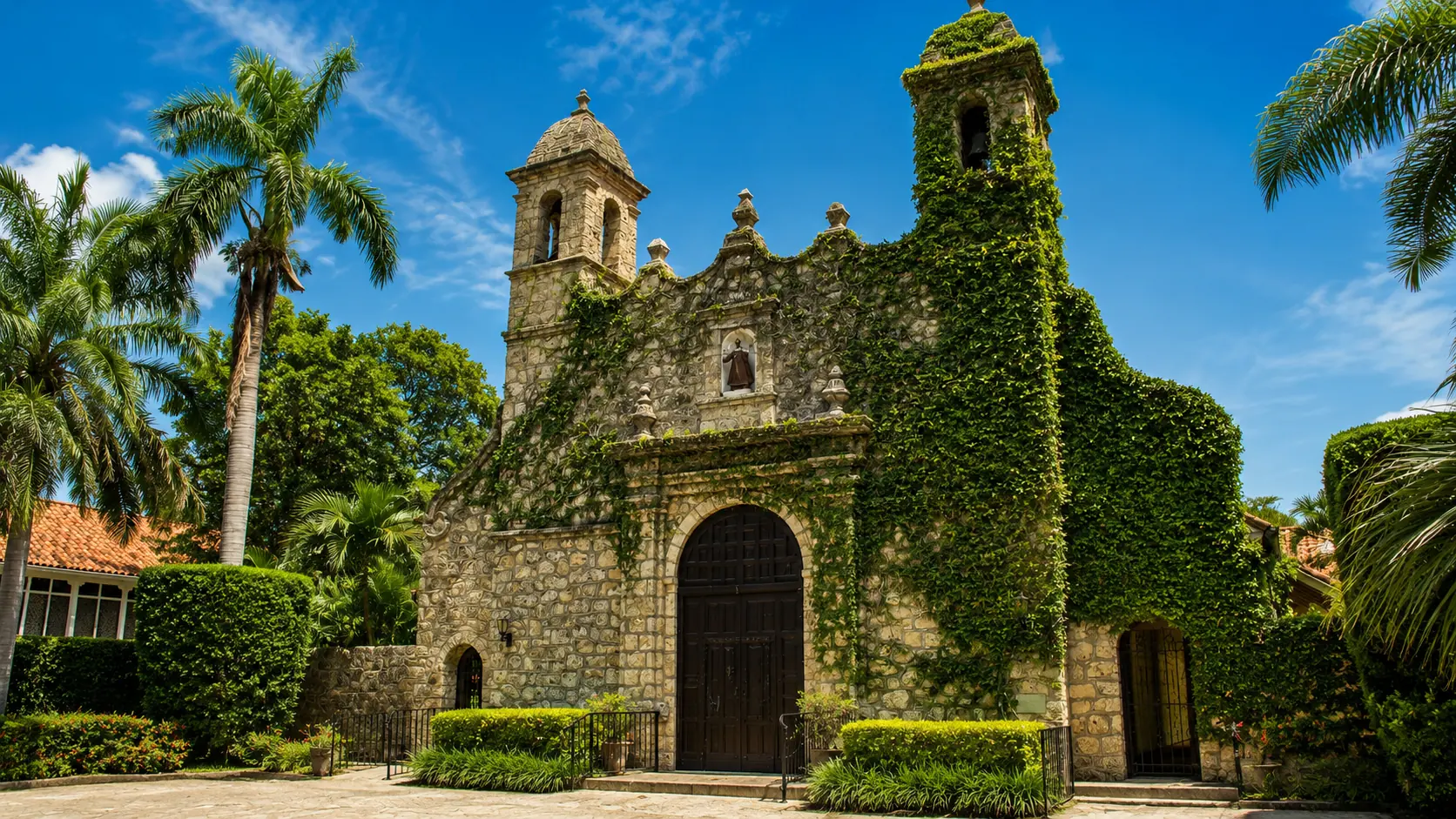
The Grove's materials are old, local and specific — and the zoning code names them.
One neighbourhood, two entirely different purchases.
This is the question that defines a Grove search, and almost nowhere else in Miami has to ask it. A buyer with the same budget can stand on a canopied estate lot in South Grove in the morning and tour a bayfront tower on South Bayshore Drive in the afternoon, and both are credible answers. They are not the same purchase. Below is what actually separates them — neither column is the better one.
Houses, estates & land
You own the ground, the trees and the roof. Everything that follows from that is yours — the freedom and the responsibility both.
- Land and privacy. Deep lots, mature hedging and canopy that screens the house from the street. Privacy here comes from planting, not from a gatehouse.
- The trees. Specimen live oaks and banyans are a large part of what you are paying for, and they are protected.
- Outdoor living. Pool, garden, guest quarters, garaging and the space to add them later.
- Architectural freedom. Within the NCD-3 envelope you decide what the house is, from a sympathetic restoration to a full rebuild.
- Bay access. On the right street, a seawall, a dock and direct water access — the scarcest thing in the Grove.
- Sole responsibility. Roof, envelope, systems, drainage, seawall and landscape are all yours to fund and schedule.
- Insurance and elevation. Flood zone, finished-floor elevation and wind mitigation drive the premium, and they vary street by street.
- Permitting and time. Tree removal, demolition and lot changes run through the City with real review, and a Grove rebuild is measured in seasons.
Condominiums & townhomes
You buy a residence and a share of an operating business. The building's finances become part of your cost of ownership.
- Lock and leave. Close the door and travel. For second-home and international buyers this is usually the deciding factor.
- Views and elevation. The bay, the mooring field and Key Biscayne from a height no Grove house can reach.
- Amenities and staff. Pools, fitness, spa, concierge, valet and security — and in branded buildings, a service standard written into a licence.
- Predictable outgoings. One monthly figure covers most of what a house owner has to budget for separately.
- Newer product. The Grove's recent buildings deliver current systems, impact glazing and modern layouts without a construction project.
- The association. Budget, reserves, assessments, insurance and litigation are shared, and you do not control them alone.
- Monthly fees. They rise. Read what they cover and what they have done over five years, not just today's number.
- Rules and structure. Leasing minimums, rental policy, pets, parking and renovation approvals constrain how you use the home; milestone and structural reserve documentation now sits at the centre of Florida condominium diligence.
What actually drives the price of a Coconut Grove house.
Grove residential fabric is old, tight and varied. Lots are irregular, streets curve, and two houses of identical size on the same street can be worth very different numbers. These are the factors that separate them, roughly in the order they tend to matter.
Water and elevation
Direct bay frontage, a permitted seawall and a usable dock sit at the top of the market. Just behind them, position on the coastal ridge versus a low-lying street changes flood zone, insurance and what you may build.
The lot itself
Area, width, depth and shape. The code's designations start at 10,000 square feet with 100 feet of width and step up through 20,000 square feet to the one-acre estate lot — and what you may build follows from which one you own.
The street
An interior South Grove street and a lot fronting a designated corridor are different products. Traffic, sidewalk condition, canopy density and how far the house sits back all show up in the price.
The trees
Specimen canopy is an asset and a constraint at once. It shades and screens the house and raises the value; it also limits footprint, drives root and drainage questions, and requires permits to touch.
Condition and permits
Roof age, impact protection, electrical, plumbing and HVAC, and whether every addition on the property was permitted. Open or missing permits are among the most common Grove findings and the most expensive to unwind late.
Walk to the village
Distance to CocoWalk, Main Highway and the bayfront parks is priced. So is distance from the noise of them. The premium peaks a few blocks out, not on the core itself.
Privacy and screening
Whether the house is visible in full from the street. Setback, hedging and the front-yard treatment do more for Grove privacy than gates, and the code pushes garages and parking back deliberately.
Redevelopment potential
What the City would permit on the lot today, and what a replacement house would cost to build. On good lots this can matter more than the existing structure — which is why some Grove houses trade as land.
Architecture and provenance
Grove architecture is deliberately varied, and the code protects that variety. A well-executed period house on a good street holds value differently from a generic rebuild.
- Height
- Limited to twenty-five feet, measured to the midpoint between the eave and the roof top, and measured from flood level or average sidewalk elevation, whichever is higher. Chimneys and small non-habitable features of 25 square feet or less may reach thirty feet.
- Green space
- A minimum of three-tenths of the lot area must remain green space. Using permeable material in the required yard can allow a 25% reduction in that requirement.
- Lot designations
- Large Lot: minimum 10,000 square feet and 100 feet of width. Oversized Lot: minimum 20,000 square feet. Estate Lot: minimum one acre. Yards adjacent to South Bayshore Drive must be at least seventy feet.
- Trees & demolition
- All demolition permits require a Waiver and referral to the Planning Department under the Tree Preservation Ordinance, and every submittal must include a tree survey prepared by a certified arborist.
- Lot diminishment
- Building sites in existence before 24 September 2005 may not be reduced in size except by Warrant. Where a house or lawful accessory structure sits across several platted lots, those lots constitute one building site.
- Architectural variety
- Adjacent lots under single ownership, or developed by one builder, may not use the same or duplicate architectural plans; adjacent buildings must be substantially differentiated in massing, footprint and detailing.
- Garages & driveways
- Street-facing garages must sit at least twenty feet behind the front wall of the house, garage doors wider than nine feet are not permitted, and driveways are limited to ten feet in width within the first five feet of a street-front setback.
- Fences
- Fences within a street-front setback must be screened from the right of way by planting, unless the fence is faced or built with oolitic limestone — the Grove's own native coral rock.
New construction and established houses in a built-out neighbourhood.
Because the Grove is built out, new houses arrive by replacement rather than by subdivision. That single fact explains most of what looks strange in the market: why some tired houses trade at prices disconnected from the structure, why builders compete for particular lots, and why the canopy is what everyone negotiates around. Neither path is superior — they carry different risks at different points in time.
New construction
Modern systems and layouts inside a long-established framework — at a premium, and with quality that varies more than buyers expect.
- Current structural, electrical and mechanical systems
- Impact protection and a new roof from day one
- Contemporary indoor/outdoor planning suited to the climate
- Smart-home, generator and EV provision built in
- Warranty coverage on a defined schedule
- Elevation and drainage designed to current requirements
- Who built it, what else they have built, and how it has held up
- Workmanship behind the finishes, not just the finishes
- What was removed from the lot, and what the tree permits allowed
- What is happening on the neighbouring lots next
- Whether the price reflects the house or the lot
Established houses
The mature streets, the canopy and the lots that a builder cannot recreate — with older bones underneath.
- Mature canopy and landscape that would take decades to replace
- Established streets, often the better position on the block
- Architectural character the code was written to protect
- Frequently a larger or better-shaped lot than newer product
- A renovation path where you control specification and budget
- Whether additions were ever legalised
- Roof age and remaining life; insurability at current rates
- Trees: which are protected, and what that means for any plan
- Renovation quality where work has already been done
- What a sympathetic modernisation would realistically cost
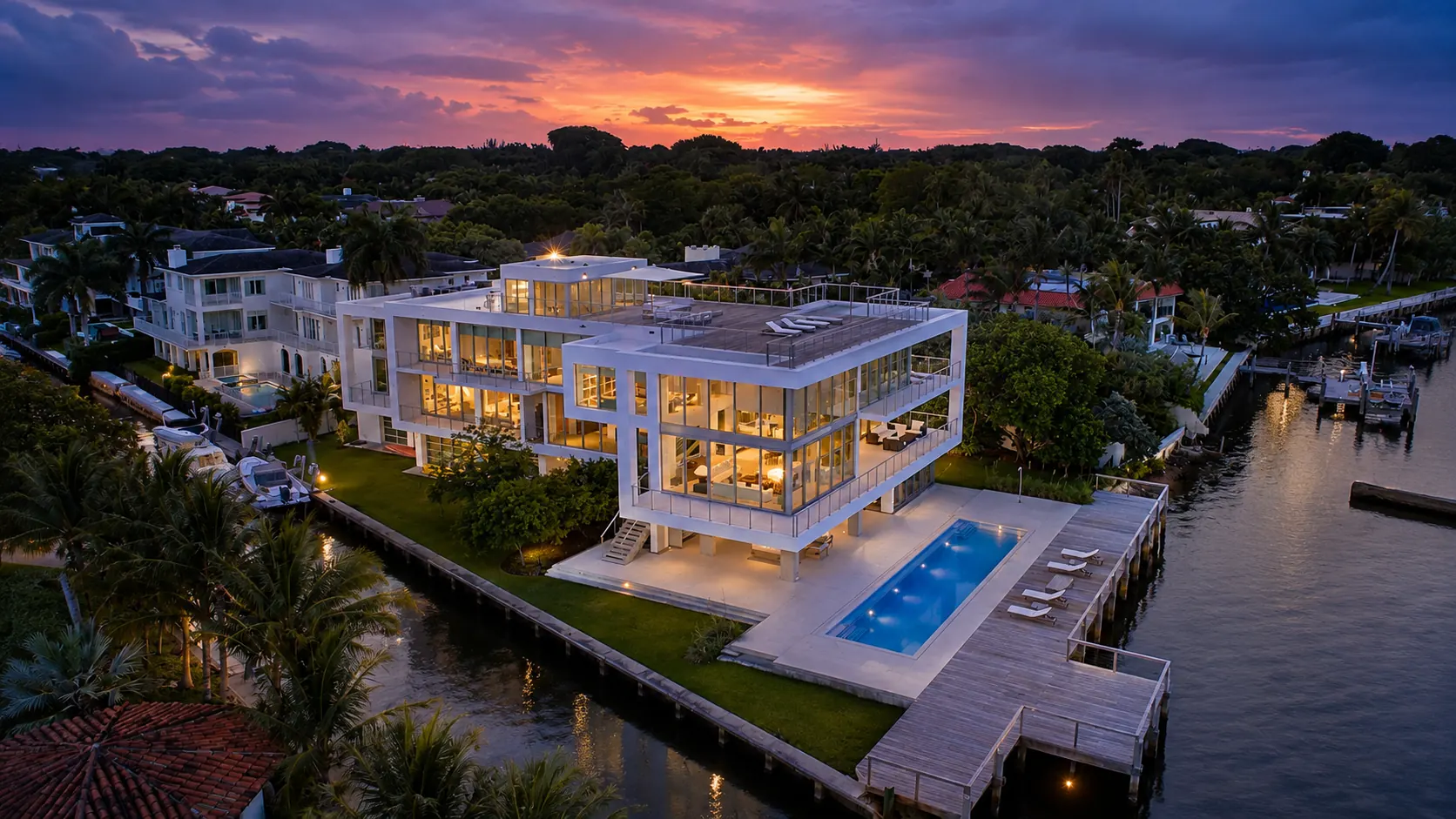
Seawall, dock and canopy — the scarcest combination in the Grove.
The Coconut Grove condominium and townhome guides.
The Grove's condominium market is small on purpose: a short line of buildings along the bayfront corridor and a handful of boutique addresses off it, which is why the individual building matters far more here than the neighbourhood average. We publish a dedicated buyer guide for each one below. This page is the hub; the guides are the detail.
Established bayfront & branded
3 guidesThe buildings that set the Grove's condominium market before the current generation. Longer operating histories, established associations, and resale inventory that trades on floor, line and view rather than on a price list.
The Grove's original branded-hotel condominium, delivered in the early 2000s as a two-tower complex with a full hotel service layer alongside the residences. Still the only Ritz-Carlton residential address in Coconut Grove.
View the Ritz-Carlton guide →Ugo Colombo's Revuelta-designed bayfront tower, and the trophy address on the corridor before the Park Grove generation arrived. Large floor plates, direct bay exposure and an established owner base.
View the Grovenor House guide →A gated twenty-acre private island in Biscayne Bay reached by its own bridge, with the original towers dating from around 1979–1981 and a racquet and yacht club on the island. The most self-contained address in the Grove.
View the Grove Isle guide →Newer luxury & boutique residences
3 guidesThe generation that reset Grove pricing: design-led, smaller residence counts, service closer to hospitality than to traditional condominium management. All delivered and occupied.
Terra and Related's three-tower bayfront development designed with OMA and Arquitectonica, with landscape by Enzo Enea. The broadest spread of residence sizes and price points among the Grove's newer buildings.
View the Park Grove guide →Terra's twin curved towers on the bay carrying the Cipriani family's Mr. C brand, designed by Arquitectonica and completed in 2024 — hospitality-style service in a residential building, with views across Peacock Park to Key Biscayne.
View the Mr. C Residences guide →A boutique waterfront building of roughly two dozen residences with private dock space and direct bay access — the smallest-scale way into new-generation Grove waterfront product.
View The Fairchild guide →Under construction & pre-construction
3 guidesThe current pipeline. Timelines, specifications and delivery dates can change, contracts are developer-drafted, and deposit and assignment terms vary. Read the registration warning before you contact any of these sales galleries.
CMC Group and Fort Partners' 20-storey waterfront tower of 70 residences, designed by Luis Revuelta with interiors by Michele Bönan. Reported to have entered vertical construction in 2026, with completion targeted for 2028.
View the Four Seasons guide →Terra's eight-storey, 194-residence building with THE WELL wellness brand, designed by Arquitectonica with interiors by Meyer Davis — including townhomes with private garden entries and ground-floor lofts. Completion targeted for 2028.
View THE WELL guide →The Allen Morris Company's mixed-use project at the village core, designed by Oppenheim Architecture, pairing a low-rise boutique condominium of roughly nineteen residences with offices and ground-floor retail. Completion targeted for 2027.
View the Ziggurat guide →A dense concentration of options — and none of them automatic.
Coconut Grove holds an unusually high number of schools for its size, including several long-established independent schools on bayfront campuses. Public assignment is by attendance boundary and is address-specific; magnet and choice programmes have their own applications; independent schools admit on their own criteria. Treat the lists below as a starting point for your own enquiries, not as an assignment.
Public schools in and around the Grove
- Coconut Grove ElementaryMiami-Dade County Public Schools
- Frances S. Tucker ElementaryMiami-Dade County Public Schools
- George Washington Carver ElementaryMiami-Dade County Public Schools
- George Washington Carver MiddleMiddle · Magnet programmes
- Ponce de Leon MiddleMiddle · Serves parts of the area
- Coral Gables Senior HighSenior high · Serves parts of the area
Independent and parochial schools in the Grove
- Ransom Everglades SchoolGrades 6–12 · Two Grove campuses
- Carrollton School of the Sacred HeartGirls · PK–12 · Main Highway
- St. Stephen's Episcopal Day SchoolEarly years & elementary
- St. Hugh Catholic SchoolPK–8 · Parochial
- Coconut Grove Montessori SchoolEarly years & elementary
- Immaculata-La Salle High SchoolSenior high · Nearby, on the bay
Why the Grove feels nothing like Coral Gables or Pinecrest.
The Grove is small, slightly informal, and organised around a working bayfront. Almost everything socially significant here happens within a mile of the water.
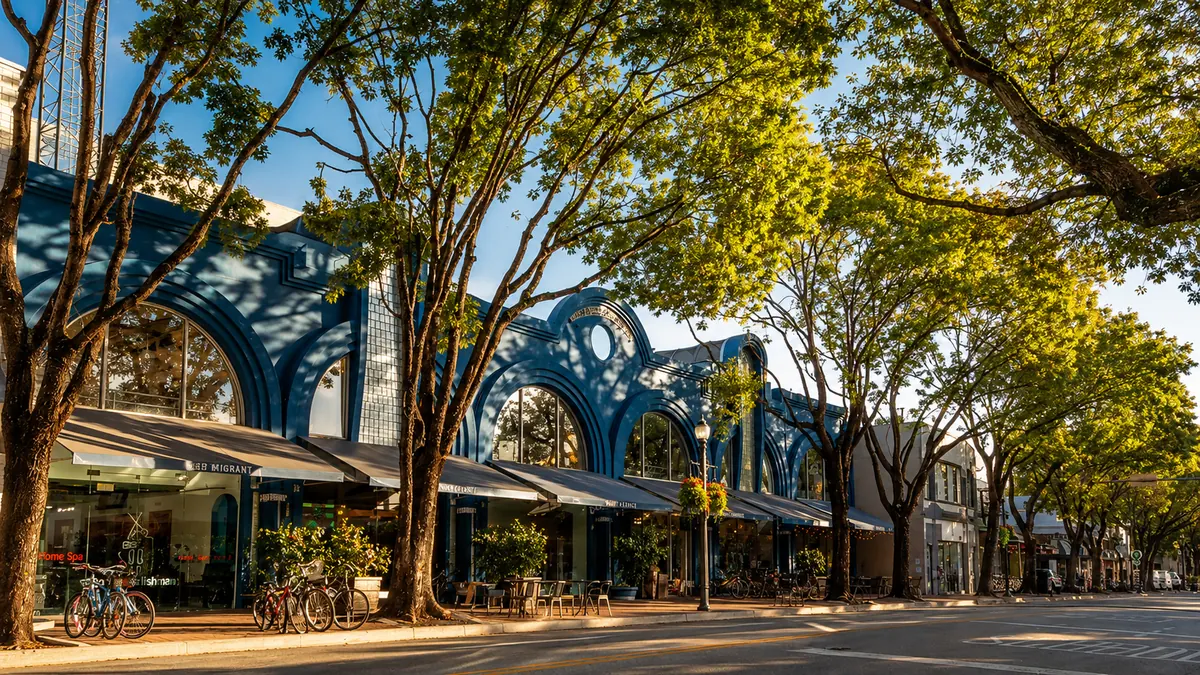
The village core
CocoWalk — comprehensively redeveloped and reopened in 2020 — sits at the centre alongside Commodore Plaza, Main Highway and Grand Avenue. The scale stayed small partly by design: under the NCD-3 overlay, individual retail establishments along the Grove corridors and in the Village Center are capped at 20,000 square feet, with anything larger permitted only by Exception.
The result is a core of independent restaurants, cafés and galleries rather than a mall district. Village-core buyers should visit on a Friday evening as well as a Tuesday morning: the difference between those two is precisely what you are deciding on.
- Walk toCocoWalk, Commodore Plaza, Main Highway, Grand Avenue, the Saturday farmers' market
- On the bayDinner Key Marina, Regatta Harbour, the Coconut Grove Sailing Club, Shake-A-Leg Miami
- ParksPeacock Park, Regatta Park, Kennedy Park, Kirk Munroe Park, Elizabeth Virrick Park
- TransitCoconut Grove and Douglas Road Metrorail stations, plus the free City of Miami trolley
The waterfront that runs the Grove
Dinner Key was an island until it was joined to the mainland by fill in 1914, then served as Pan American's seaplane base — the terminal is now Miami City Hall. Today it holds one of Florida's largest marinas, and the Regatta Harbour redevelopment has restored the 1930s Pan Am hangars alongside waterfront restaurants and event space.
Miami's oldest house, still on its site
Built in 1891 for Commodore Ralph Middleton Munroe, yacht designer and Grove pioneer, The Barnacle is the oldest house in Miami-Dade County standing in its original location. It sits on five bayfront acres of tropical hardwood hammock at 3485 Main Highway, donated to the State by the Munroe family in 1973 and open as a state park.
A genuine sailing culture
The mooring field off Regatta Park is not scenery — it is a working anchorage, and the Grove's sailing calendar is one of the oldest in Florida. The Coconut Grove Sailing Club runs lessons and racing; Shake-A-Leg Miami runs adaptive watersports from the same bayfront.
Full representation, better transaction economics.
We are not discount representation. We provide full luxury buyer representation — market analysis, negotiation, due-diligence coordination and management of the transaction through closing — and we return part of what we earn to the buyer. Eligible buyers receive up to 50% of our buyer-agent commission back at closing.
A bayfront house and a bayfront residence at the same price carry very different insurance, maintenance and capital exposure over five years, so purchase price is a smaller share of the picture than buyers expect. The rebate is one of the few lines you can influence directly, and it can improve your net economics independently of whatever price reduction you negotiate with the seller.
What a Grove buyer should actually be modelling: purchase price, buyer-agent compensation, the rebate, inspections and diligence costs, closing costs, property tax on a reassessed basis, flood and windstorm insurance, association fees where applicable, renovation or improvement budget, and carrying costs. We build that model with clients before they tour, not after they are under contract.
Compensation varies by listing and by transaction, and not every purchase makes buyer-agent compensation available. Any rebate depends on the compensation actually being received, on your written buyer-representation agreement, on lender approval of credits where financing is involved, and on closing terms. We confirm the figure in writing before you commit to anything.
Get your Coconut Grove rebate estimate in writing.
Send us the address, the building, or just the budget and the sub-district. We will tell you whether buyer-agent compensation appears to be available and what the rebate would look like on that specific purchase.
Request my written estimateNo obligation. We will also tell you honestly if a rebate is not available on a particular transaction, or if something you have already done has affected it.
New to how Florida buyer rebates work? Start with the Florida Buyer Rebate Guide — the legal basis, lender and tax treatment, and what to confirm before you register.
Talk to us before you register, tour or inquire.
This is the single most common way a buyer loses a rebate, and it usually happens by accident — a form filled in on a Sunday, a walk-in at a sales gallery, a message sent to a listing agent. Coconut Grove has active new-development sales at Four Seasons Private Residences, THE WELL and Ziggurat, and the same principle applies to builder-owned houses.
Why the order of events matters
Developers, builders and their sales galleries operate broker-registration rules. Those rules generally determine whether a buyer's broker is recognised on a transaction, and they commonly require the broker to register or accompany the buyer on the first visit or first inquiry. If you register or tour on your own first, the developer may take the position that no buyer's broker is recognised.
If no buyer-agent compensation is recognised and received, there is no commission from which a rebate can be paid. The same logic applies when a buyer contacts a listing agent directly on a resale house or residence and that agent ends up representing both sides.
What to do instead: browse, research and shortlist as freely as you like. Before you fill in a registration form, book a tour, walk into a sales gallery or send an inquiry about a specific property, send us the address first. One message usually preserves the whole opportunity.
Already contacted someone? Tell us exactly what happened and when. Sometimes it can still be resolved, particularly if no tour has occurred and no registration was completed. Sometimes it cannot — and we will tell you which it is rather than let you find out at closing.
Two markets, two completely different diligence lists.
Buying a Grove house has almost nothing in common with buying a Grove residence: one is about the land, the structure and the permits; the other about an association's finances and rules. Due diligence is property- and building-specific, and we coordinate the specialists rather than substituting for them.
Houses, estates & land
The land and the paperwork first, then the building, then the money.
- Current survey: boundaries, encroachments and easements
- Title search and any recorded restrictions or covenants
- Full permit history — and any open or expired permits
- Whether every addition, pool and accessory structure was legalised
- Code enforcement or violation history on the parcel
- Zoning transect and NCD-3 designations that apply to the lot
- Protected and specimen trees, and what may be touched
- What the City would realistically permit for any rebuild or addition
- General inspection plus roof, electrical, plumbing and HVAC specialists
- Impact protection on windows and doors, and wind mitigation report
- Grade, drainage and any history of standing water or intrusion
- FEMA flood zone, elevation certificate and finished-floor elevation
- Seawall and dock condition and permitting, where applicable
- Utility positions, septic or sewer connection, and service capacity
- Bound flood and windstorm insurance quotes, not estimates
- Property tax modelled on a reassessed basis
Condominiums & townhomes
You are underwriting an association as much as a residence.
- Current budget and the most recent reserve study
- Several years of financial statements, not just the latest
- Reserve funding level and whether it is fully funded or waived
- Special assessments levied, in progress or under discussion
- Board minutes — often the most revealing document in the set
- Master insurance policy, deductible and recent claims history
- Any litigation involving the association
- Maintenance fee history over the last five years
- Milestone inspection and structural integrity reserve documentation
- Recent and planned capital projects — roof, envelope, garage, elevators
- Leasing restrictions, minimum lease terms and short-term rental policy
- Pet, parking, storage and renovation rules
- Management company and on-site staffing
- Where branded or serviced: what the brand provides, its cost and licence term
- On new development: deposit schedule, assignment restrictions and who drafted the contract
- Estimated closing costs, developer fees and first-year carrying cost
The Grove is also home to a wellness-branded development, and branded or serviced buildings carry their own diligence list. Our featured analysis of wellness real estate in South Florida sets out what to ask about operator agreements, amenity capacity and the recurring cost of running a wellness programme.
Not which is best — which one fits how you actually want to live.
These three markets take most of the same buyers, and the choice between them is rarely about price. It is about density, formality, how much land you want, and whether you want the option of a building.
Coconut Grove
Bayfront, canopied and compact — the only one of the three with a real condominium market and a walkable core.
- A working waterfront: marinas, sailing clubs, mooring field, public parks
- The densest tree canopy of the three, protected by its own zoning overlay
- A genuine village centre you can walk into
- Houses, estates, land, townhomes and luxury condominiums in one neighbourhood
- Smaller, more irregular lots than Pinecrest; more variety street to street
- Closest of the three to Brickell, Downtown and Key Biscayne
- Part of the City of Miami, not its own municipality
Coral Gables
Larger, more formal and more civic, with its own government and its own architectural review.
- Its own municipality, with distinct permitting and design review
- A broad Mediterranean architectural tradition, actively enforced
- Waterfront estates, gated communities and golf-oriented sections
- A substantial commercial and civic core along Miracle Mile
- A condominium market, though differently distributed from the Grove's
- Generally more formal in feel; less canopy density than the Grove
- Wide range of lot sizes and price points across a large area
Pinecrest
Estate-scale single-family living, low density, and effectively no condominium market at all.
- Its own village government since 1996
- Large residential lots; estate zoning built around one-acre and 2.5-acre minimums
- Mature canopy and deep setbacks; privacy from land rather than gates
- A substantial custom and spec new-construction market by replacement
- No walkable village core and no meaningful lock-and-leave product
- Quieter and more suburban in feel than either of the other two
- Furthest of the three from Brickell and the bay
Two live searches, because the Grove is two markets.
This page explains how Coconut Grove works — the sub-districts, the code, the buildings and the economics. What it cannot do is show you what is available today, because MLS inventory changes continuously through the day. Both searches below run on EAJordan.com and both are live MLS searches, not directories.
Homes & land
Filtered to houses and vacant land, so you see single-family homes, estates and redevelopment sites — and not condominiums.
- Live Coconut Grove MLS listings
- Single-family homes and bayfront estates
- Vacant land and redevelopment sites
- Recent closed sales
- Saved searches and new-listing alerts
Condos & townhomes
Filtered to condominiums and townhouses, covering the bayfront corridor, the boutique buildings and townhome product across the Grove.
- Live Coconut Grove MLS listings
- Bayfront and boutique condominiums
- Townhomes and lofts
- Recent closed sales
- Saved searches and new-listing alerts

Independent buyer advocacy — not the seller's side.
Enrique Jordan and Alejandro Jordan, Esq. have participated in over $1 billion in real estate transactions and bring more than 30 years of combined experience representing buyers, sellers, investors and developers across South Florida — including both sides of the Coconut Grove market, houses and buildings alike. Our office is in Coral Gables at 121 Alhambra Plaza, minutes from the Grove.
- Florida-licensed real estate professionals
- Independent buyer representation
- Over $1 billion closed
- Negotiation, due-diligence coordination and transaction economics
- Equally at home on a South Grove estate lot and a bayfront association's financials
- Full-service representation through closing
Frequently asked questions
Is Coconut Grove a good place to buy a luxury home?
It depends what you want the property to do for you. Coconut Grove is Miami's oldest neighbourhood — the community predates the City of Miami itself — and it is unusual because it is not one market. Within roughly the same square mile you can buy a bayfront estate on a large canopied lot, a renovated cottage on a quiet street, a townhome, a boutique waterfront condominium or a residence in a branded tower. If you want mature trees, walkability to a real village centre, and the bay at the end of the street, the Grove is one of the strongest options in Miami-Dade. We evaluate the specific property, its lot or its association, rather than the neighbourhood as a whole.
What is the difference between North Grove and South Grove?
Both are formal sub-districts in the City of Miami's zoning code, not just local shorthand: the Miami 21 Coconut Grove Neighborhood Conservation District (NCD-3) defines North Grove, Center Grove, South Grove and the Village Center with written boundaries. In practice North Grove sits closest to Brickell, Downtown and the Rickenbacker, and holds most of the bayfront condominium corridor along South Bayshore Drive. South Grove is quieter and more purely residential, with larger interior lots, denser canopy and the Grove's gated waterfront enclaves. The full code boundaries for each sub-district are set out earlier on this page. Boundaries should be confirmed for a specific address with the City of Miami.
Are there luxury condominiums in Coconut Grove?
Yes, and that is what separates the Grove from Pinecrest or Ponce Davis. The bayfront corridor along South Bayshore Drive carries a small, deliberate collection of luxury buildings rather than a dense skyline. The established layer includes the Ritz-Carlton Coconut Grove and Grovenor House; the newer layer includes Park Grove, Mr. C Residences Coconut Grove and The Fairchild. Grove Isle is a gated twenty-acre private island reached by its own bridge. Under construction or in pre-construction are Four Seasons Private Residences Coconut Grove, THE WELL Coconut Grove and Ziggurat. We publish an individual buyer guide for each of them.
Is Coconut Grove better suited to a house or a condominium?
Neither is better — they are different products with different cost structures, and the Grove is one of the few Miami neighbourhoods where a buyer can genuinely choose between them without changing neighbourhood. A house gives you land, trees, privacy, a pool and control over your own roof, and it gives you sole responsibility for the roof, the seawall, the insurance and the trees. A condominium or townhome gives you lock-and-leave convenience, amenities, staff and a predictable monthly cost, and it gives you an association whose budget, reserves, assessments and rules you do not control on your own. The honest comparison is total annual cost of ownership plus the work you are willing to do, not purchase price.
Is new construction common in Coconut Grove?
It is common but constrained. Coconut Grove is effectively built out, so new single-family construction almost always means replacing an existing house on an existing lot, and the Miami 21 NCD-3 overlay shapes what can be built — height, green space and tree protection in particular, all set out in the zoning summary earlier on this page. On the condominium side, new supply is limited to a handful of projects at any one time. Rules change, so confirm current requirements for a specific parcel with the City of Miami.
What should I inspect before buying a Coconut Grove house?
Start with the survey and the permit history: because Grove lots are old and irregular, boundaries, easements, encroaching structures and unpermitted additions are recurring findings. Then the building envelope — roof, impact protection, electrical, plumbing, HVAC and any evidence of past water intrusion. Then the site: grade and drainage, flood zone and finished-floor elevation, any seawall or dock, and the trees, which are protected here and can affect what you may build or remove. The full house diligence list is set out earlier on this page. We coordinate inspections and specialists; we do not provide legal, engineering, insurance or tax advice.
What should I review before buying a Coconut Grove condominium?
The association is the asset you are buying into as much as the unit. Review the current budget and reserve study, several years of financial statements, board minutes, any special assessments levied or contemplated, the master insurance policy and deductible, structural and milestone inspection documentation, and any litigation. Then the rules that govern your use: leasing and minimum-term restrictions, short-term rental policy, pets, parking, storage and renovation approvals. Where a building carries a hotel, branded or serviced structure, understand what the brand provides, what it costs and how long the licence runs. Documents are building-specific, and we obtain and read them with you.
What should I know about flood zones and elevation in Coconut Grove?
Coconut Grove fronts Biscayne Bay, and elevation varies noticeably across it — parts sit on the coastal ridge while bayfront and low-lying streets sit much closer to sea level. That difference shows up in flood zone designation, required finished-floor elevation, insurance pricing and what can be built. The City's own single-family height limit is measured from flood level or average sidewalk elevation, whichever is higher, which shows how directly elevation drives design here. Before you commit, obtain the FEMA flood zone for the specific parcel, an elevation certificate where one exists, and current flood and windstorm insurance quotes rather than estimates. We are not insurance advisers; confirm these questions with qualified professionals for the property.
How does Coconut Grove compare with Coral Gables?
They are neighbours and they overlap at the top of the market, but they feel different. Coral Gables is a larger municipality with its own government, a Mediterranean architectural tradition enforced through its own review process, a substantial civic and commercial core along Miracle Mile, golf-oriented sections and gated communities. Coconut Grove is a City of Miami neighbourhood, more compact, more informal, more heavily canopied, with a walkable village core and a bayfront condominium corridor that Coral Gables does not replicate in the same way. Our Coral Gables buyer guide covers that market in the same depth.
How does Coconut Grove compare with Pinecrest?
Pinecrest is a low-density single-family village of large residential lots roughly fifteen miles south of Downtown Miami, with its own municipal government since 1996 and estate zoning built around one-acre and 2.5-acre minimums. It has no condominium market to speak of and no walkable village centre. Coconut Grove is denser, older, closer to Brickell and the bay, with a mixed housing stock and a genuine village core. If you want maximum land and a quiet interior street, Pinecrest is the stronger option; if you want the bay, the canopy and the choice between a house and a lock-and-leave residence, the Grove is. Our Pinecrest buyer guide covers that market in detail.
Can I receive a Buyer Rebate on a Coconut Grove purchase?
In most cases, yes. When we represent you and buyer-agent compensation is actually received on the transaction, eligible buyers receive up to 50% of that commission back at closing — on houses, land, townhomes, resale condominiums and new-development purchases alike. The rebate is not automatic: it depends on compensation being available and actually received, on your written buyer-representation agreement, on lender approval of credits where financing is involved, and on closing terms. Not every listing offers buyer-agent compensation. The single thing that most often removes the opportunity is contacting a developer, builder or listing agent first, because broker-registration rules can determine whether we are recognised as your broker at all. Talk to us before you register, tour or inquire, and we will confirm the figure in writing before you commit.
Where can I search Coconut Grove homes, land, condos and townhomes?
We keep two live searches because the Grove is two markets. For single-family homes, estates and vacant land, use our Coconut Grove homes and land search, which is filtered to houses and vacant land. For condominiums and townhomes, use our Coconut Grove condos and townhomes search. Both run on EAJordan.com and both are live MLS searches that update continuously through the day, not directories. Use this page to understand the market, the sub-districts, the buildings and the rebate; use the searches to see what is actually available today. Research freely — then contact us before you act on a specific property, so your representation, and any rebate, stays intact.
Check your Coconut Grove rebate first.
One call protects it:
(786) 550-6294- Have a specific Grove house or residence in mind? We'll check whether buyer-agent compensation appears to be available before you tour or inquire anywhere.
- Still deciding between a house and a condominium? We'll run both on the same budget, including the annual costs that never appear in a listing.
- Looking at a bayfront lot, a teardown or land? We'll look at the zoning, the trees, the elevation and the seawall position with you before you commit to a strategy.
- Considering Four Seasons, THE WELL or Ziggurat? Contact us before you register or visit the sales gallery — that order is what preserves the rebate. If you have already inquired somewhere, tell us exactly what happened and we'll tell you honestly whether it can still be preserved.