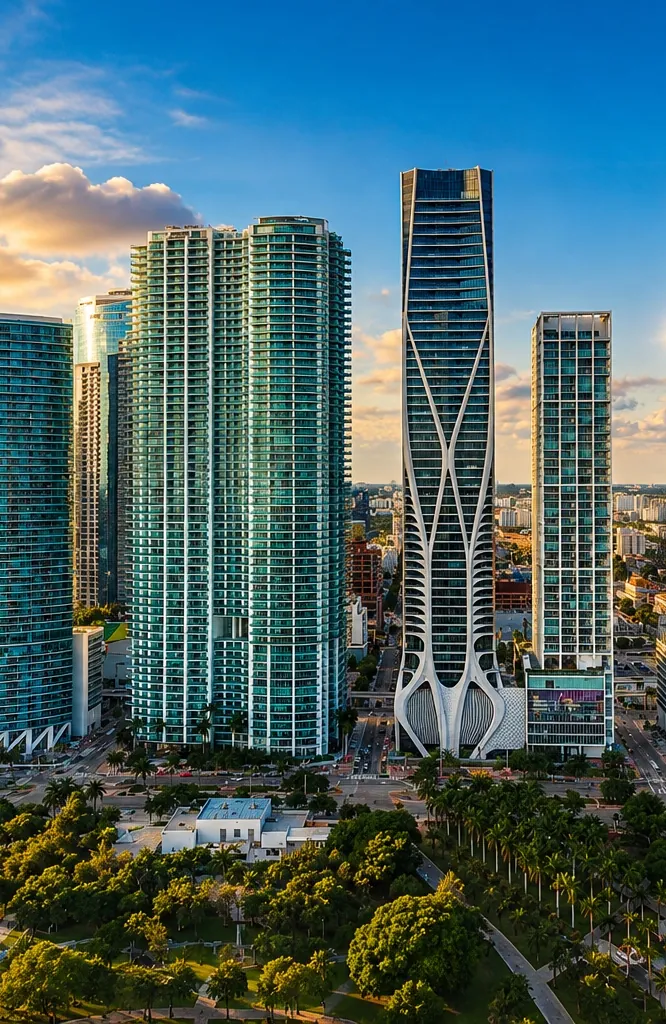
Downtown Miami condos — keep up to half the commission.
Resale and new development across Downtown, with independent buyer representation. Eligible buyers receive up to 50% of the buyer-agent commission we receive back at closing.
What could you keep on a Downtown Miami purchase?
Downtown spans a wide price range — from established Biscayne Boulevard towers to limited-collection landmarks. Move the slider to your range.
Illustration only — not a quote and not a guarantee. Compensation varies by listing, by developer and by transaction, and not every purchase makes buyer-agent compensation available. Any actual rebate depends on the compensation actually received, your buyer-representation agreement, lender approval of credits, and closing terms. We confirm the figure in writing before you commit.
Looking at new development? Talk to us before you register — here's why.
Miami's urban core — on the water, and on the transit map.
Downtown is where Miami's waterfront, its cultural institutions, its arena and its rail connections all sit within a few blocks of one another. For buyers, that combination is the argument: a genuinely urban address with Biscayne Bay on one side and the Miami River on the other, and a range of condominium stock deep enough to make real comparison possible.
Bay and river frontage
Biscayne Boulevard towers look east over Biscayne Bay, Bayfront Park and Museum Park, while buildings at the southern end sit where the Miami River meets the bay — a working waterway with bridge and boat activity at close range.
Museum Park and the arena
The Pérez Art Museum Miami and the Phillip and Patricia Frost Museum of Science sit together in Museum Park on the bayfront, alongside Kaseya Center at 601 Biscayne Boulevard, home of the Miami Heat and a major concert venue.
Adrienne Arsht Center
Just north along Biscayne Boulevard, the Adrienne Arsht Center for the Performing Arts anchors the Arts & Entertainment District, within easy reach of the northern Downtown and Park West towers. The same stretch holds the largest unresolved site on this waterfront — the cleared former Miami Herald parcel, most recently the subject of a four-tower architectural concept that has no identified developer, approval or sales programme behind it.
Metromover and Metrorail
The Metromover is a free automated people mover circulating through Downtown and connecting to Brickell and the Omni area; Metrorail connects at Government Center. Several Downtown towers sit within a short walk of a station.
MiamiCentral and Brightline
MiamiCentral is Brightline's Miami terminal and also serves Tri-Rail and Metrorail, putting Fort Lauderdale, West Palm Beach and Orlando on a single rail connection from the middle of the neighbourhood.
Miami Worldcenter
The 27-acre Miami Worldcenter district in Park West opened its retail and public-space phase in 2025, adding roughly 300,000 square feet of shops, restaurants and entertainment plus new plazas, with further residential and hospitality phases planned.
Downtown is not one condo market. It is four or five.
Buyers who treat Downtown as a single neighbourhood tend to compare the wrong buildings against each other. The sub-areas differ in building age, exposure, density and how residential the surrounding blocks feel at night. Walkability in particular varies: parts of Downtown are highly walkable, and parts are dominated by wide boulevards, ramps and surface parking.
Thirteen Downtown condominium guides — grouped the way buyers actually shop.
Each building below has its own independent buyer guide on TheBuyerRebate.com covering layouts, exposures, building structure and the specific due-diligence questions that matter there. Eleven are completed condominiums with resale inventory; two are active new development, where the registration rules below apply. Start with the sub-area that matches how you want to live, then compare within it.
Bayfront & Miami River
Five buildings · completed 2005–2024Southern Downtown, from Bayfront Park down to where the river meets the bay. Bay and river exposure, and the shortest walk to Brickell.
Two towers of roughly 44 and 45 stories at the mouth of the Miami River, with combined residence counts commonly reported near 900 — the broadest inventory at the southern end of Downtown.
View the One Miami guide →The mural-clad tower directly across from Bayfront Park, with a wide spread of sizes, floors and price points that makes it one of Downtown's most accessible entry buildings.
View the 50 Biscayne guide →A waterfront tower where the Miami River meets Biscayne Bay, sharing its site with a hotel. Reported layouts include two-story townhomes on lower river-facing floors and tower-suite residences above.
View the EPIC Miami guide → Branded residencesA completed waterfront tower at the mouth of the Miami River, the first residential development to carry the Aston Martin name, with both developer-controlled and resale opportunities.
View the Aston Martin Residences guide →Twin North and South towers on Biscayne Boulevard. Reported layouts run from studios and loft-style residences with roughly 18-foot ceilings on lower floors to conventional homes on floors 8 through 49.
View the Vizcayne guide →Museum Park & Park West
Five buildings · completed 2007–2019The cultural quarter: parkland frontage, bay exposure and Downtown's most architecturally distinctive towers, from the 2007 cycle through to 2019.
Zaha Hadid's sculptural exoskeleton tower: 62 stories holding roughly 83 to 84 residences, one of Miami's lowest residence-per-floor ratios and the signature silhouette of the Downtown skyline.
View the One Thousand Museum guide →Chad Oppenheim's distinctive tower of roughly 48 to 50 stories with about 200 loft-style residences, and bay, park and skyline exposures depending on line and floor.
View the Ten Museum Park guide →A Revuelta-designed waterfront tower overlooking Museum Park and the bay. Most sources report 63 stories and roughly 516 residences, with upper floors trading footprint for volume and privacy.
View the 900 Biscayne Bay guide →An Arquitectonica all-glass tower over Museum Park and the bay. Most sources, including the association, report 57 stories and 516 residences, with floor-to-ceiling glass standard across most types.
View the MarinaBlue guide →A residential and hospitality tower of roughly 66 to 67 stories with about 300 private residences — expansive layouts and bay, park and skyline exposures at the northern end of the boulevard.
View the Marquis Miami guide →Miami Worldcenter
One building · completed 2019Inside the master-planned Worldcenter district in Park West, adjacent to MiamiCentral and the new retail promenade.
Under construction & new development
Two projects · register through us firstDowntown's active new-development pipeline. On these, the order of events decides whether a rebate is possible at all — read this first. Casa Bella has now delivered: see what its opening means for buyers.
A branded hotel-and-residences tower under construction on Biscayne Boulevard, widely reported as set to become Miami's first supertall. Completion timing is an estimate and can change.
View the Waldorf Astoria guide → Completed 2026Related Group and Alta Developers' Arquitectonica-designed tower with interiors by Piero Lissoni, at the northern end of the Biscayne corridor opposite the Arsht Center. Topped off in July 2025 and reported complete in October 2026, with closings underway.
View the Casa Bella guide →Looking further afield? Additional pre-construction and under-construction projects across Miami are covered separately — start with our pre-construction rebate pages, or read how the Miami pre-construction buyer rebate works before you contact any sales gallery.
Downtown lets you compare both paths in the same neighbourhood.
Few Miami neighbourhoods give buyers a genuine choice between established inventory and new development within the same few blocks. Neither path is universally better. They fail and succeed in different ways, and the right answer depends on your timeline, your tolerance for uncertainty and how much you value seeing the actual residence before you commit.
Resale
Buying an existing residence in a completed, operating building.
- You can physically inspect the actual residence, its finishes and its condition
- The view is the view — you see the real exposure from the real floor
- The association already has an operating history, budget and reserve position
- Financial documentation, minutes and assessment history are available to review
- Comparable sales exist within the same building and often the same line
- Occupancy is measured in weeks, not years
Pre-construction & new development
Buying from a developer before or during construction.
- The newest product, current design standards and new amenity programmes
- Deposits are typically phased across the construction period
- Residence and line selection happens before completion, while inventory is open
- A longer planning horizon between contract and closing
- Completion schedules are estimates and can change
- Contracts are developer-drafted; deposit terms, assignment rules and future carrying costs all need review
In both cases, advertised pricing is only one part of the economics. Association fees, taxes, insurance, parking, assessments and — on new development — developer closing costs and deposit schedules can move the real number materially. We would rather you compared total cost of ownership than headline price. One nearby option collapses the choice: Viceroy Brickell, just south of Downtown in Brickell, is a completed building with developer inventory ready for immediate occupancy — new development you can inspect the way you would inspect a resale.
The goal is not to win the sticker price. It is to improve the whole transaction.
Most buyers focus their energy entirely on negotiating the purchase price. That matters, but it is one line in a longer equation — and it is often the line with the least room in it, particularly on new development where the developer sets pricing.
A more useful way to look at a Downtown purchase is the full picture: purchase price, plus buyer-agent compensation, minus any rebate, plus closing costs, plus ongoing ownership costs. Buyer-agent compensation is the one component that is normally invisible to the buyer — it is part of the transaction whether or not the buyer ever sees it. Our position is simply that when that compensation is available and we receive it, you should keep up to half of it.
Eligible buyers receive up to 50% of our buyer-agent commission back at closing. On a $1,200,000 Downtown residence with an example 2.5% buyer-agent commission, that illustrative rebate is $15,000 — money that goes toward closing costs, furnishings, the first year of association fees, or simply back in your account.
How that figure is calculated, who may qualify and why a rebate is permitted in Florida are explained step by step in our Florida Buyer Rebate Guide.
What that figure actually depends on, in every case:
- Compensation varies by resale listing and by developer
- It must be offered, available, and actually received by us
- It is addressed in your buyer-representation arrangement
- Lender approval of closing credits may apply
- Transaction, closing, legal and other limitations may apply
- Every figure is confirmed in writing before you commit
One conversation decides whether the rebate exists at all.
You still receive complete, Florida-licensed buyer representation — search, offer, negotiation, inspections, financing coordination and closing. The rebate is what we do with our side of the compensation, not a reduction in the service you get.
Check my Downtown rebateA rebate is not guaranteed. It is possible only where buyer-agent compensation is actually received and a rebate is permitted, and it remains subject to your buyer-representation agreement, lender approval of credits, applicable Florida rules and closing terms.
On new development, the order you do things in matters more than anything you negotiate.
This is the single most common way buyers lose a rebate they would otherwise have qualified for, and it happens before they have made any decision at all.
Contact us before you register with, visit, or inquire with a developer.
Developers set their own broker-registration policies. Those policies generally govern whether a buyer's broker is recognised on the transaction — and recognition is what makes a commission, and therefore a rebate, possible. If you submit an online inquiry, walk into a sales gallery, or register on a project's website before a broker is named, the developer may decline to recognise us afterwards.
The same principle applies more loosely on resale: contacting a listing agent directly, or registering on a portal that routes you to one, can complicate representation later. A listing agent works for the seller. So does a developer's sales associate. Neither is representing your side of the transaction.
Already inquired somewhere? Call us and tell us exactly what happened — which project, when, and through what channel. Sometimes it can still be preserved, sometimes it cannot, and we will tell you honestly which one it is rather than have you find out at contract.
What to investigate before you commit — building by building.
Downtown's condominium stock spans roughly two decades and several very different building structures. A large-format 2007 tower, a limited-collection landmark and a residence sharing a site with a hotel raise genuinely different questions. None of the below is legal, tax or financial advice, and the answers are building-specific — your attorney and accountant should review anything material.
Association finances
- Budget and reserves
- Assessment history
- Pending or planned assessments
- Insurance placement and cost
- Delinquency levels
Building condition
- Structural and inspection documentation, where applicable
- Maintenance and repair history
- Capital projects underway
- Pending litigation
- Common-area condition
Use and rules
- Minimum lease terms and leasing caps
- Short-term-rental rules where relevant
- Hotel or condo-hotel structure where relevant
- Pet policies
- Parking, valet and storage assignment
Contract and cost
- Developer contract terms, on new development
- Deposit schedule and escrow
- Estimated completion, and what can change it
- Assignment restrictions
- Closing costs and property taxes
Different buyers want very different things from this neighbourhood.
Downtown attracts an unusually mixed buyer pool, which is part of why its inventory is so varied. None of the below is a promise about returns or performance — it is a description of what each group tends to be looking for.
Primary residents
Buyers who want to live without depending entirely on a car, and who value being able to reach an office, an arena, a museum and a rail station on foot or by Metromover. Building choice matters most here, because evening character varies block to block.
Second-home buyers
Buyers who want a lock-and-leave city residence with building security and services, close to the airport by rail or road, and usable for short stays without maintaining a house.
International purchasers
Foreign nationals can own Florida real estate, and Downtown is one of Miami's most international residential markets. Financing, tax treatment and reporting differ for non-resident buyers and should be reviewed with your own advisors.
Investors
Buyers focused on leasing rules first and headline price second. Minimum lease terms, leasing caps and any short-term-rental or hotel-programme structure determine what is actually permissible in a given building.
Luxury buyers
Buyers looking for limited-collection product and architectural significance rather than square footage alone — a smaller field in Downtown than in Brickell, but it includes some of Miami's most distinctive towers.
Buyers comparing districts
Buyers weighing Downtown against Brickell, Edgewater or Brickell Key. The rebate approach is identical across all of them, so the decision can stay about the neighbourhood rather than the representation.
How Downtown reads against the neighbourhoods next to it.
These are adjacent markets, and many of our buyers look at two or three before deciding. The comparison below is about buyer experience, not about declaring a winner — and our rebate approach is the same in all of them.
-
Downtown MiamiThe widest spread of building age and entry point, cultural and entertainment anchors, the strongest transit position, and both bay and river frontage. Character varies block to block.
-
BrickellDenser, more uniformly walkable, and the deepest concentration of new branded luxury towers in the city — see Brickell.
-
EdgewaterA newer bayfront corridor just north of Downtown, dominated by recent towers with open water views — see Edgewater.
-
Brickell KeyA private island across the channel, quieter and lower-density, trading urban energy for calm and security — see Brickell Key.
Comparing resale markets across Miami more broadly? Start with our Miami resale condo buyer rebate hub, which covers neighbourhood-by-neighbourhood guides, building directories and buyer due diligence across the city.
See current Downtown Miami inventory
The building guides on this page explain each Downtown tower — how it is laid out, what the exposures do, and what to investigate before committing. What they cannot do is show you what is available today, because MLS inventory changes continuously.
Our Downtown Miami page at EAJordan.com covers the live side: current listings, recent closed sales and rental activity, updated straight from the MLS.
- Live Downtown MLS listings
- Condos for sale and for rent
- Recent closed sales
- Saved searches
- New-listing alerts
- High-resolution photos
- Payment estimator
- Market information
TheBuyerRebate.com is where you learn Downtown Miami, compare its buildings and understand how the Buyer Rebate Program works. EAJordan.com is where you search live Downtown inventory. Together they cover the whole process — education, research, representation, and a potential rebate at closing.
Search Downtown Miami condos for sale → Research freely. Contact us before you act on a specific residence, so your representation — and any rebate — stays intact.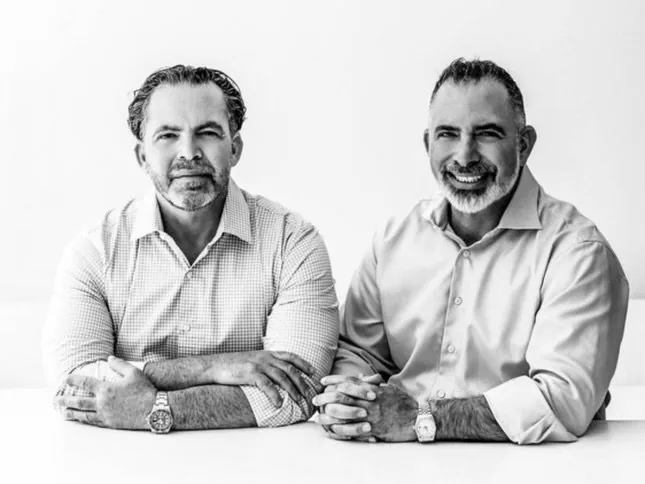
Independent buyer advocacy — not developer sales.
Enrique Jordan and Alejandro Jordan, Esq. have participated in over $1 billion in real estate transactions and bring more than 30 years of combined experience representing buyers, sellers, investors and developers across South Florida — including Downtown Miami's resale and new-development markets. Our office is in Coral Gables at 121 Alhambra Plaza, a short drive from Downtown.
- Florida-licensed real estate professionals
- Independent buyer representation
- Over $1 billion closed
- Full-service representation through closing
Frequently asked questions
Is Downtown Miami a good place to buy a condo?
That depends entirely on what you want from the building and the block. Downtown offers a genuinely urban, transit-served waterfront setting with a wide range of condominium ages, layouts and price points, plus cultural and entertainment anchors within walking distance for many buildings. What it does not offer is uniformity: a bayfront tower on Biscayne Boulevard, a loft-style building near the Miami River and a residence inside Miami Worldcenter are very different propositions. We evaluate the specific building, its financials and its exposure rather than the neighbourhood as a whole.
What types of condos are available in Downtown Miami?
The inventory spans studios and loft-style residences with double-height ceilings, conventional one- to three-bedroom homes, two-story townhomes on lower river-facing floors of some towers, and penthouse or tower-suite residences at the top. Building types range from large-format towers of 500-plus residences to One Thousand Museum, which holds roughly 83 to 84 residences across 62 stories. Some buildings also operate alongside a hotel, which changes how the association, amenities and rental rules work.
Are there both resale and pre-construction options in Downtown Miami?
Yes, and Downtown is one of the few Miami neighbourhoods where you can compare both within a few blocks. Eleven of our Downtown building guides cover completed condominiums with resale inventory, and two cover active new development on the Biscayne Boulevard corridor. The rebate approach is the same for both paths, but the timing rules are different: pre-construction requires that we are involved before you register with a developer.
How does the Buyer Rebate work on a Downtown Miami condo?
We represent you as your Florida-licensed buyer's agent through the entire purchase. When buyer-agent compensation is available on the residence you buy and a rebate is permitted under your buyer-representation agreement, your lender and your closing terms, we credit up to half of the compensation we actually receive back to you at closing. It is not automatic and it is not guaranteed. We confirm what is possible in writing before you commit to anything.
Can buyers receive a rebate on a pre-construction purchase?
Often, yes, but the timing rule is stricter than on resale. Developers set their own broker-registration policies, and those policies generally determine whether your broker is recognised on the transaction at all. If you visit a sales gallery, submit an online inquiry or register with a developer before we are in place, the developer may decline to recognise us later, and no recognition means no commission and therefore no rebate. Contact us before you register anywhere.
Should I contact a Downtown Miami developer or listing agent directly first?
We would rather you spoke to us first. A listing agent and a developer sales associate both represent the seller, not you. Beyond representation, the order of events matters: on new development in particular, registering yourself with a sales gallery before a broker is named can permanently remove the compensation a rebate would come from. If you have already inquired somewhere, tell us exactly what happened and we will tell you honestly whether anything can still be preserved.
What should buyers investigate before purchasing a Downtown Miami condo?
Review the association's budget, reserves and recent assessment history, the current insurance placement, any structural or inspection documentation applicable to the building, pending litigation, and the maintenance record. Then review the rules that govern how you can use the residence: minimum lease terms, leasing caps, pet policies, parking and storage assignments, and any short-term-rental or hotel-programme structure. Due diligence is building-specific and none of this is legal or tax advice, so your attorney and accountant should review anything material.
How does Downtown Miami compare with Brickell?
They are adjacent and connected by the Metromover, but they read differently. Brickell is a dense financial district with the deepest concentration of branded luxury towers and a highly walkable core. Downtown is more mixed: a bayfront boulevard of large-format towers, a cultural quarter around Museum Park, the Miami Worldcenter district and a quieter river edge. Downtown generally offers more variation in building age and entry point; Brickell offers more concentration of new branded product.
Can international buyers purchase a condo in Downtown Miami?
Yes. Foreign nationals can own real estate in Florida, and Downtown is one of Miami's most international residential markets. Financing, tax treatment and reporting obligations differ for non-resident buyers and should be reviewed with your own attorney and tax advisor. We regularly represent overseas purchasers and coordinate with their advisors through the transaction.
Where can I see current Downtown Miami condo inventory?
Two places. Our individual Downtown building guides on TheBuyerRebate.com explain each tower, its layouts and its buyer considerations. Our Downtown Miami page at EAJordan.com shows live listings, recent closed sales and rental activity straight from the MLS. MLS inventory changes continuously, so treat any listing you find as a starting point and contact us before you act on a specific residence.
Check your Downtown Miami rebate first.
One call protects it:
(786) 550-6294- Have a specific Downtown building in mind? We'll check whether buyer-agent compensation appears to be available before you tour or register anywhere.
- Comparing resale against new development? We'll walk you through both paths on the same purchase price, including the costs that don't appear in the listing.
- Already contacted a sales gallery, portal or listing agent? Tell us exactly what happened — we'll tell you honestly whether a rebate can still be preserved.