
Coral Gables Real Estate. An Independent Buyer’s Guide.
The submarkets, the houses, the records to pull before you offer and what ownership really costs — explained by independent buyer representatives based in the city.
Eligible buyers receive up to 50% of our buyer-agent commission back at closing — with full, Florida-licensed representation on homes, condos, and new development.
Talk to us before you tour, register on a portal, or contact a listing agent — here's why. Researching first? Start with the submarkets.
Illustration only — not a quote or a guarantee. Not every listing offers buyer-agent compensation. Your actual rebate, if any, depends on the compensation actually received, your buyer-representation agreement, lender approval of credits, and closing terms. We confirm any figure in writing before you commit.
Five kinds of Coral Gables purchase. Know which one you are actually underwriting.
Most Coral Gables purchases are one of five products, each with its own approvals, cost structure and diligence file — and most houses sit between two of them. This is the map; the sections below carry the detail.
Original historic residence
A 1920s–30s Mediterranean Revival house that is largely intact: barrel tile, arched openings, coral-rock detail, courtyards. Many are locally designated.
- Check designation status and what a Certificate of Appropriateness would cover
Renovated older home
Mid-century to 1990s houses, and older ones, with someone else’s work already done — the largest middle layer of the market.
- Verify what was done, when, and under which permits
Substantially rebuilt or new construction
A new house on an established lot, built to the current Florida Building Code after Board of Architects approval.
- Confirm the approvals and permits match what was built
Waterfront or guard-gated estate
Canal, lake or bay lots inside the city’s gated enclaves, where land and water set the price and the house can be secondary.
- Seawall, dock, flood zone and elevation certificate lead the file
Condominium or new development
Established downtown buildings, Deering Bay and The Gables Club, or a pre-construction project along the Ponce corridor.
- On new projects, contact us before you register with a sales gallery
Orientation, not a ranking
None of these is better in general; let your priorities, the property’s condition, its approvals and its documents decide. Nothing here predicts appreciation.
Tell us which one you are considering →What buyers are actually buying here — and where the city line runs.
A small, self-governing city inside greater Miami: Mediterranean Revival by design, estate streets around three golf courses, guard-gated waterfront enclaves along Old Cutler Road and the bay, a boutique condominium market and a walkable downtown on Miracle Mile and at Merrick Park, with the University of Miami inside the city and the airport, Brickell and Biscayne Bay minutes away. One question comes before any search: whether the address is inside the city at all.
Where Coral Gables ends — and why the line matters.
- Jurisdiction
- The City of Coral Gables, in Miami-Dade County. The city sets its own operating millage (5.559 for tax year 2025; the same rate proposed for 2026), issues its own building permits and runs its own design review and historic-preservation program. A house a block outside the line answers to the county instead: county permits and tree rules, no Board of Architects, a different stack of millage.
- Inside the city
- Downtown and Miracle Mile, North Gables, the Riviera and Granada corridors and — per Miami-Dade County election records for their security-guard districts — Old Cutler Bay, Cocoplum, Snapper Creek Lakes, Pine Bay Estates, Hammock Lakes, Hammock Oaks Harbor, Kings Bay and the Coral Gables portion of Gables by the Sea. Deering Bay is a private Coral Gables community with its own guide. Gables Estates, Islands of Cocoplum, Tahiti Beach, Journey’s End and Sunrise Harbour are commonly described as Coral Gables enclaves — confirm any lot’s municipality by folio with the Property Appraiser.
- Outside the city, with a Coral Gables-style address
- High Pines / Ponce-Davis and Little Gables are unincorporated Miami-Dade County, each bordered by the city on three sides; the city opened an annexation petition process for High Pines / Ponce-Davis in 2023 and no annexation has been confirmed. Both carry county millage and county permitting; our Ponce-Davis buyer guide covers that market parcel by parcel.
- Schools and services
- Public-school assignments are set by Miami-Dade County Public Schools by address and must be confirmed for the specific property; the city runs its own police and fire departments.
- What this page does not do
- Publish median prices or cost averages — the numbers that matter come from the records for the specific property; the market section explains what public records do show.
A planned city that has stayed planned for a hundred years.
Most of greater Miami has been rebuilt two or three times over. Coral Gables has not. Laid out in the 1920s as one of America’s first fully planned communities — named entrances, plazas, fountains, wide landscaped streets and a Mediterranean vocabulary applied deliberately — it still runs on that plan: exterior design passes through a Board of Architects, the canopy is protected by permit, and the city reads as coherent block after block.
That is why it draws primary-residence buyers rather than short-hold speculators, and why the market behaves differently from Brickell or Miami Beach.
It also pairs large-lot neighborhoods with a real commercial center — Miracle Mile, Giralda Plaza’s restaurant row and the Shops at Merrick Park — and a downtown business district of law firms, banks, consulates and Latin American headquarters that supports the condominiums in the core; the Biltmore and its golf course, the Venetian Pool and Fairchild Tropical Botanic Garden sit around it.
The market is deep and it is expensive. Historic estates, waterfront homes and full-service condominiums frequently trade in the seven figures, so when buyer-agent compensation is offered — typically a percentage of the price — a permitted rebate of up to half is frequently a five-figure credit; we don’t promise what any specific listing offers. Buyers weighing Coral Gables usually also look at Coconut Grove, Pinecrest, South Miami, the Ponce-Davis estate area, Key Biscayne or Brickell; the comparison further down puts them side by side.

One city, several markets. The address decides the file.
Two Coral Gables houses of the same size and age, three miles apart, can carry different tax lines, approval processes, insurance questions and documents to read before you offer. The variation follows the water, the gates, the age of the plat and, in a few places, the city line itself. The matrix is deliberately qualitative — no price bands, because a canal lot in Cocoplum and a corner lot off Granada Boulevard are not priced on the same axis. Use it to narrow, then send us the address and we will pull the records.
| Group | Property types | Era & architecture | Waterfront | Lot & privacy | Gates & associations | Jurisdiction | Diligence focus |
|---|---|---|---|---|---|---|---|
| Waterfront & guard-gated enclavesOld Cutler Bay, Cocoplum, Snapper Creek Lakes, Pine Bay Estates, Hammock Lakes, Hammock Oaks, Kings Bay, Gables by the Sea; Gables Estates, Islands of Cocoplum, Tahiti Beach, Journey’s End, Sunrise Harbour† | Estate houses; some original, many rebuilt | Mostly post-1950s subdivisions; new construction common | Canal, lake or open-bay lots; dock potential varies by lot and bridge clearance | Large lots; guard-gated access | Homeowners’ associations with their own documents and transfer terms; several communities are served by security-guard special taxing districts billed on the tax bill | City of Coral Gables for the communities named first; confirm by folio for any lot — Gables by the Sea straddles the Pinecrest line | Seawall and dock permits and condition; flood zone and elevation certificate; the 50%-of-value flood rule if you plan to renovate; association documents; the tax bill’s non-ad valorem lines; vessel size versus bridge clearance |
| Deering Bay | Condominiums, villas and estate homes in one private golf-and-marina community | Early 1990s onward | Bayfront; marina access is property-specific | Gated; club at the center | Several associations; club membership is separate from property ownership | City of Coral Gables | Condominium documents, milestone-inspection and reserve-study status, master insurance; club terms; slip rights — see our Deering Bay guide |
| Golf-corridor & estate streetsAround the Biltmore, Granada and Riviera courses; Country Club Prado | Single-family, from original Mediterranean Revival to recent rebuilds | 1920s to present; the city’s strongest design-review culture | Some Coral Gables Waterway canal frontage; otherwise interior | Mid-to-large lots; street character protected by the Board of Architects | No gate; no HOA on most streets | City of Coral Gables | Board of Architects history; designation or district status; permit history and roof; tree permits for lot work; flood zone by parcel |
| Historic core & North GablesThe original Merrick-era plat north of the Biltmore toward Coral Way and Flagler | Smaller 1920s–30s houses and cottages; duplexes near the edges | Mediterranean Revival and the city’s thematic villages; many locally designated properties | None | Smaller lots; walkable to downtown | None | City of Coral Gables | Designation status and the Certificate of Appropriateness regime; the Historic Preservation Officer’s sign-off on any demolition permit; unpermitted additions; roof age and insurability |
| Central Gables & the University areaSouth of the Biltmore toward US-1 and the South Miami line | Single-family, townhouses, small condominiums | Mid-century and later; renovation-stage housing | None | Medium lots; University of Miami proximity | None on most streets | City of Coral Gables — some adjacent streets are South Miami or unincorporated | Confirm the municipality first; permits and roof; school assignment by address; rental rules if you are investing |
| Downtown, Miracle Mile & the Ponce corridor | Condominiums — established buildings and new development | 1980s–2000s buildings plus current projects | None | Vertical living; walk to the business district | Condominium associations | City of Coral Gables | Milestone inspection and reserve study on buildings of three or more stories; the statutory resale documents; pending assessments; developer contract terms on new projects — see our Cassia, The Avenue and Ponce Park guides |
| Adjacent, but outside the cityHigh Pines / Ponce-Davis; Little Gables | Estates and large-lot houses (Ponce-Davis); smaller houses (Little Gables) | Varied | Generally none | Large lots in Ponce-Davis | None | Unincorporated Miami-Dade County — county millage, county permits, county tree rules, no Board of Architects | Verify jurisdiction by folio; EU-1 zoning and septic status in Ponce-Davis — see our Ponce-Davis guide |
† Commonly described as Coral Gables enclaves; municipal status not verified from an official source for this edition — confirm by folio. The communities named before them appear in Miami-Dade County election records for security-guard special taxing districts within the city; check every community-level statement in the recorded documents for the specific property.
The registry: one line each.
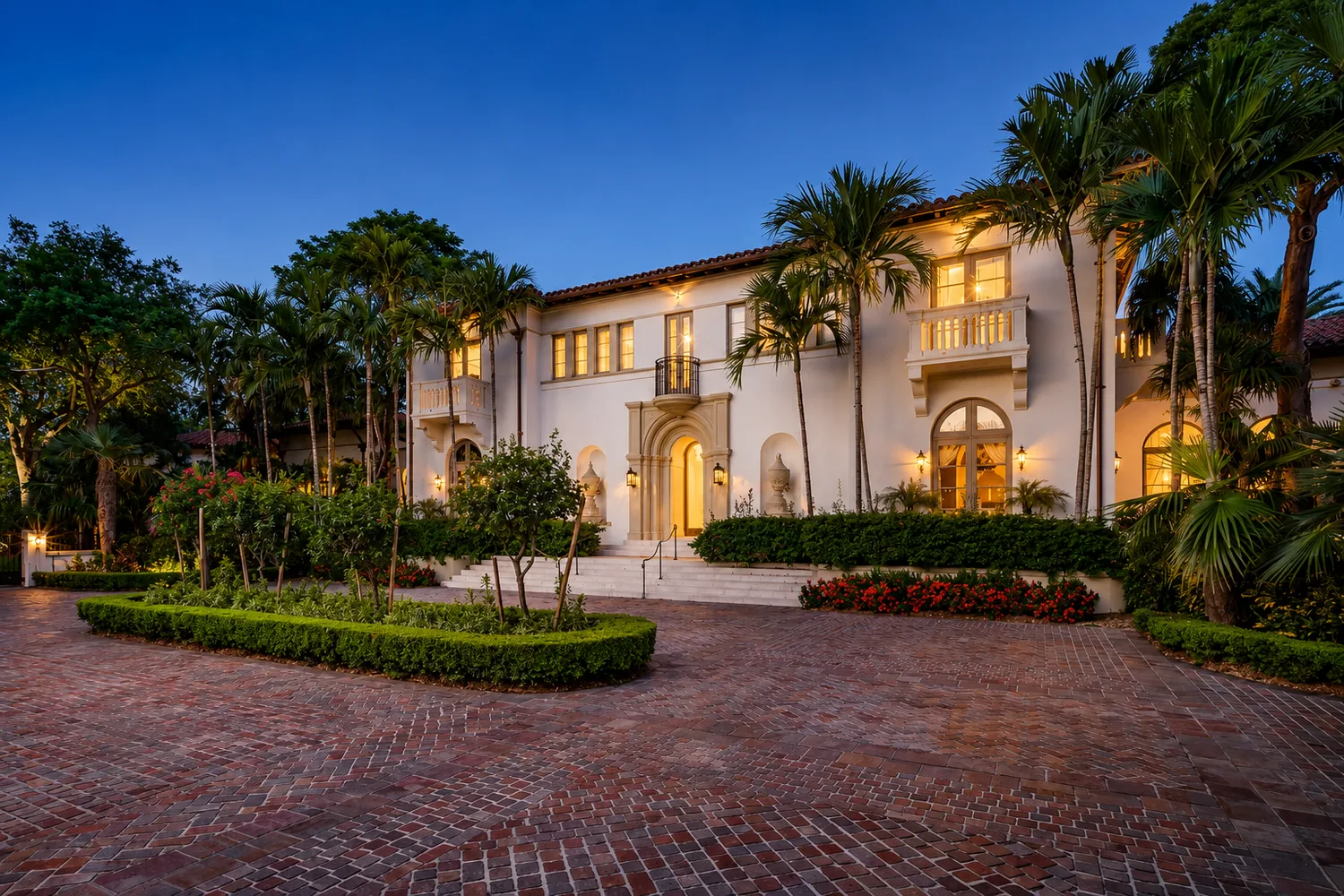
What each kind of Coral Gables house asks of its owner.
A 1926 house on its original lot and a 2024 house two streets away are different products with different files; the table shows where the questions move, not which column wins. Read your column as a diligence list, then the neighbors — most Coral Gables houses sit between two of them.
| Factor | Original historic | Renovated older home | Rebuilt or new | Waterfront estate | Condominium |
|---|---|---|---|---|---|
| Price vs improvement cost | A lower entry is possible; the improvement budget is the real number — price the work before the offer | You pay for someone else’s work: verify what was done, when, under which permits | Highest finish cost per square foot; little deferred work in year one | Land and water set the price; the house may be secondary | Price plus the association’s financial position |
| Architecture & preservation | Exterior changes pass through the Board of Architects; if locally designated, a Certificate of Appropriateness is required before most exterior work and demolition is restricted | Same review regime; confirm past exterior work was approved and permitted | Design approval already obtained — confirm it matches what was built | As for the house type, plus county and city permits for seawall and dock work | The exterior is the association’s; interior work follows its rules and city permits |
| Maintenance | Barrel-tile roofs, original windows, older plumbing and wiring — cycles to budget, not defects | Depends on scope: cosmetic work versus systems | New systems and warranties; pools and landscaping still need budgets | Seawall, dock, lift and salt air on top of the house | Interior only; the building’s cycles arrive as assessments |
| Construction & code era | Pre-code masonry can be excellent; wind protection is usually retrofitted | A mix of eras under one roof — ask for the permit set | Built to the current Florida Building Code, whose High-Velocity Hurricane Zone rules cover all of Miami-Dade | Varies with age; elevation and flood standards matter most | Structural history matters more than finish |
| Permitting | Open, expired or missing permits are common on long-held houses; the city’s online permit record is the reference | Same, and more so — unpermitted additions are a financing, insurance and resale problem | Confirm the certificate of occupancy and that every permit is closed | Plus the county’s Class I environmental permit record for the seawall and dock | Association approvals plus city permits for interior work |
| Insurance | Roof age, wiring and plumbing drive insurability; 4-point and wind-mitigation reports are standard requests | Roof and systems dates matter more than the renovation date | The newest roofs and impact openings typically price best | Flood zone and elevation certificate are central; wind and flood are separate policies | The master policy covers the structure; you insure the unit interior, contents and liability |
| Financing & appraisal | Appraisers need comparable historic sales; condition can affect lending | The appraisal supports the work only if it was permitted and documented | Appraisal gaps are possible when new construction is the only comparable | Jumbo lending; the appraisal depends on water-type comparables | Lenders underwrite the association as well as the borrower |
| Resale | Designated, well-kept originals have a loyal buyer pool | Renovation quality is the resale story | The new-build premium narrows as the house ages; street and lot remain | Water type and dock capacity are durable value drivers | Building reputation, reserves and assessment history |
Two things historic buyers are often not told. Designated properties are not taxed more simply because of their designation, and approved rehabilitation of a designated property can qualify for a city and county ad valorem exemption on the improvements for up to ten years, under a covenant that binds later owners — both per the city’s own historic-preservation materials; the exemption runs through a public hearing and applies to improvements, not land.
Ten records to pull before you offer — and where each one lives.
The rules are the same for every Coral Gables property; what they find is property-specific. “Established” means the rule applies by statute, ordinance or published city procedure; “property-dependent” means it applies only if the property has that feature; “practice” means a step careful buyers take regardless. None of it is a reason to avoid the market — it is a reason to have it raised before you are under contract.
Zoning, design review, historic status, permits, trees
- Zoning district and lot envelope — the city’s online zoning map and code, with parcel lookup; coverage, floor-area and height limits are set by district and decide what can be added or rebuilt. Established.
- Board of Architects history — the Board meets weekly and reviews new residences, additions, pools, paving, roof tiles and other exterior work, including all exterior paint; a typical permit needs preliminary and final approval first. Past approvals should match what you see. Established for exterior work.
- Historic designation and demolition review — the Historical Resources office keeps the register of designated properties and districts; designation brings the Certificate of Appropriateness regime (staff approve minor work; additions, demolition and major remodels go to the Historic Preservation Board). Every demolition permit for a non-designated structure also needs the Historic Preservation Officer’s approval, and an eligible house can be referred for designation; a Historical Significance Determination letter, valid 18 months, tells you where you stand before you contract. Established; consequence is property-dependent.
- Permit history — the city’s online permit portal shows status and history by address; open, expired and missing permits are easier to resolve before contract, and unpaid code-enforcement fines can become liens. Established.
- Tree permits — removing or relocating trees requires a city permit with a mitigation plan; specimen trees start at 18 inches of trunk diameter, trees of 24 inches or more carry double mitigation, and a tree survey accompanies Board of Architects and demolition applications. Established.
Values, flood, water, utilities, the tax bill
- Property Appraiser record — market, assessed and taxable value and current exemptions; the gap between assessed and market value is the scale of the reassessment after your purchase. Established.
- FEMA flood zone and elevation certificate — the zone by parcel from FEMA’s Flood Map Service Center; the elevation certificate (ask the seller) prices flood insurance, and federally regulated lenders require coverage in a Special Flood Hazard Area. The city applies new-construction flood standards to improvements that equal or exceed 50% of a building’s market value. Established; cost is property-dependent.
- Seawall and dock permits (waterfront) — work in or over tidal waters needs a Miami-Dade Class I environmental permit as well as city permits; docks may not extend beyond 25% of the waterway’s width. Pull the record and inspect the seawall. Property-dependent.
- Septic or sewer — a few pockets remain on septic; connection status affects renovation scope. Property-dependent.
- Non-ad valorem lines on the tax bill — solid-waste and stormwater fees and, in several gated communities, a security-guard district assessment; exemptions do not reduce them. Property-dependent.
What insurers and lenders will ask for anyway
- General inspection plus the 4-point (roof, electrical, plumbing, HVAC) and wind-mitigation reports insurers ask for. Practice.
- Roof age and permit date. Under Florida law an insurer may not refuse a homeowner’s policy solely because a roof is under 15 years old, and an older roof can qualify if an inspection shows five or more years of useful life — establish the roof’s date and condition inside the inspection period. Established.
- Impact-opening survey; survey and elevation certificate; wood-destroying-organism report; pool-barrier compliance; seawall inspection on waterfront lots. Practice; scope is property-dependent.
- Written quotes for windstorm, flood and excess coverage before the inspection period ends. Practice.
Documents you are entitled to
- Homeowners’ associations — Florida law requires a disclosure summary before you sign a contract on an HOA parcel; the contract is voidable for three days after you receive it, or until closing if sooner. Read the covenants, budget and transfer terms. Established where an HOA exists.
- Condominiums — on a resale the seller must furnish the declaration, bylaws and rules, budget and financial statement, the milestone-inspection summary where one applies, the most recent structural integrity reserve study or a statement that none exists, and the statutory FAQ sheet; you may void within three business days of receiving them. Established.
- Milestone inspections and reserve studies apply to condominium buildings of three or more habitable stories from 30 years (25 at local option near salt water); the city’s own building official administers Miami-Dade’s recertification program inside Coral Gables. Established.
- Guard-gate and club obligations — what the purchase includes, requires or merely permits, in writing, before you go hard on a deposit. Property-dependent.
Two disclosures Florida sellers owe every residential buyer. A property-tax disclosure summary at or before contract, warning you not to rely on the seller’s current taxes; and, for contracts since October 1, 2024, a flood disclosure stating whether the seller has filed a flood-insurance claim or received federal flood assistance — broadened on October 1, 2025 to cover any flood damage the seller knows of and assistance from any source. Neither replaces your own research; we make sure both are in the file, and read, before you are committed.
Considering a Coral Gables property? Send us the address.
We can review available public records — the Property Appraiser’s values and exemptions, the city’s permit history, the FEMA zone, designation status and zoning district — and identify important questions to investigate before you tour or make an offer. It is a preliminary public-record review, not a legal opinion, engineering inspection, title examination, appraisal or insurance determination.
Send us the addressInclude the address in the message field of the contact form. Findings depend on what the public record contains; we tell you what we found and what still needs a professional’s eyes.
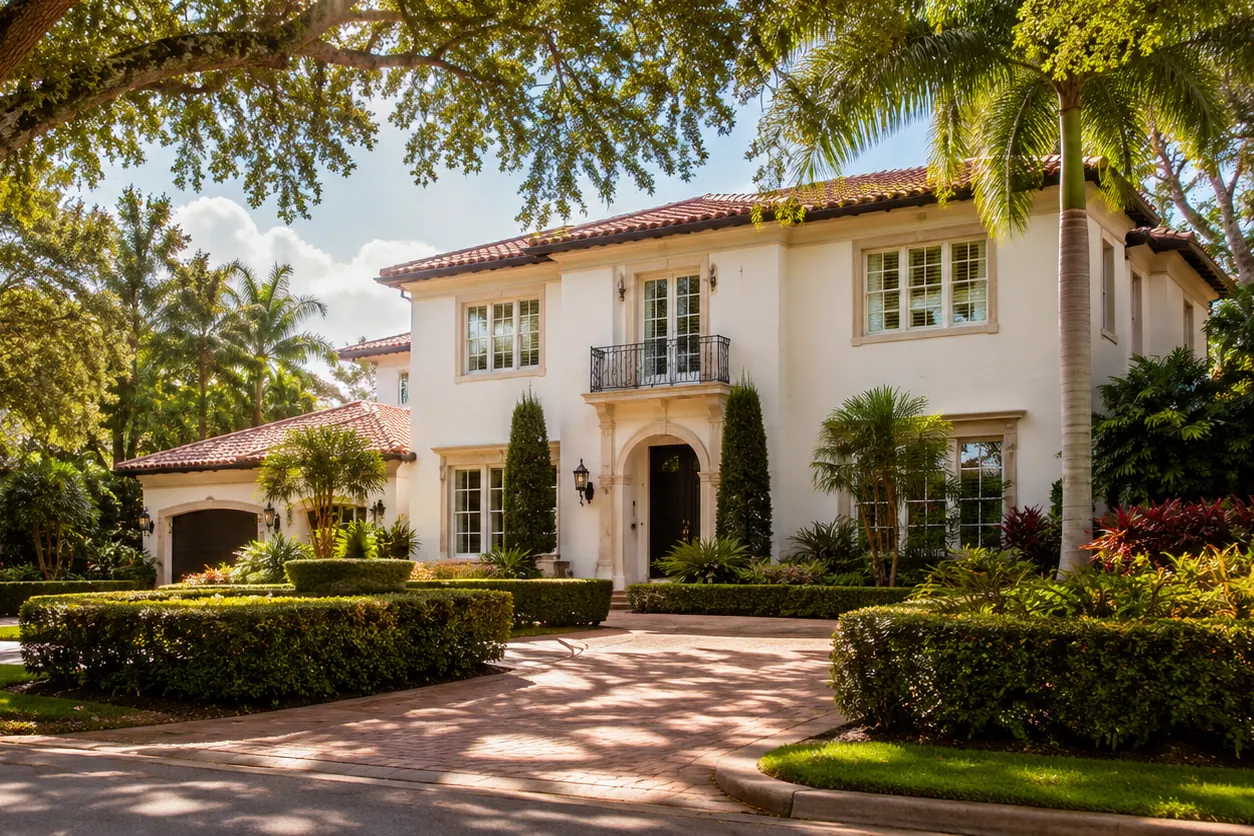
Two tax lines, three policies and a maintenance reserve: what a Coral Gables home costs beyond the price.
The purchase price is the most visible number and rarely the decisive one: a Coral Gables house carries five recurring layers, and the lower-priced of two houses is not always the cheaper one to own. The page publishes no figures for any of them, on purpose — the numbers come from the documents for the specific property.
Ad valorem property taxes
County, school board, city and district millage on taxable value
The seller’s bill is not a forecast of yours: homestead property is reassessed to market value as of January 1 after a sale, the seller’s Save Our Homes cap ends with the sale, and the first fully reset bill arrives the November of the following year. Homestead and the cap apply only to a permanent primary residence; other property falls under a separate 10% limitation for non-school taxes.
The parcel’s market, assessed and taxable values and current exemptions; then run the county’s estimator at the price you expect to pay with only the exemptions you will qualify for. Our Coral Gables home values and property taxes article explains the three values, the reset and portability.
Non-ad valorem & special-district charges
On the same tax bill, not based on value
Solid-waste and stormwater fees and, in several guard-gated communities, a security-guard special taxing district assessment levied per unit and collected like a tax. Exemptions do not reduce these lines.
The current tax bill’s non-ad valorem lines and the district’s recent assessment history; ask the association what the district covers and what it does not.
Insurance
Windstorm, flood and excess — three separate decisions
A homeowners policy with windstorm coverage, priced on roof age, wiring, plumbing and impact openings; flood insurance through the NFIP or a private carrier, priced from the FEMA zone and elevation certificate and required by federally regulated lenders in a Special Flood Hazard Area; and excess coverage at estate values. Citizens, the state-backed insurer, is a last resort by statute and now requires flood coverage on its wind policies, phased in through 2027.
The seller’s 4-point and wind-mitigation reports and elevation certificate; the roof’s permit date; written quotes before the inspection period ends.
Maintenance reserve
Schedules, not surprises
Barrel-tile and flat roofs, pools, irrigation and the canopy that makes the streets what they are (tree work needs a permit), impact windows and doors, generators and — on waterfront lots — seawall, dock and lift cycles in salt air.
Roof permit dates, the last seawall inspection, pool and equipment ages, and the permit record for every major system.
Association & club costs, where applicable
HOA, condominium and club
HOA dues and transfer terms in the gated communities; condominium assessments, reserves and pending special assessments downtown and at Deering Bay; club memberships, which are separate from property ownership and carry their own entry costs and dues.
The current budget, the reserve study or statement, the special-assessment history, and the transfer and membership terms in writing.
Only the current documents tell you the number. We model the five layers from the actual records for the property you are considering, as part of the offer rather than an afterthought.
The same house, two different files.
Many Coral Gables purchases close in cash; many more use jumbo financing. The house does not change — what changes is who else approves the file, how long it takes, which protections you negotiate for yourself and how a rebate credit is handled at closing. (This section is for buyers, not the “we buy houses for cash” services that advertise to sellers.)
No lender in the file — so you supply the discipline
- Appraisal. None is required. Order one anyway if you want an independent check on the price you are paying.
- Inspections. Your contract rights are identical to a financed buyer’s. Do not shorten the inspection period to look stronger; negotiate on price or timeline instead.
- Contingencies. No financing contingency, which is why cash offers read as cleaner. Keep inspection and title contingencies.
- Timeline. Set by the contract and the title work, not by a lender’s underwriting calendar.
- Insurance. Nobody will require windstorm or flood coverage. Buy both anyway; the risk is not smaller because no bank is involved.
- Funds and title. Expect to document the source and availability of funds early. If you plan to take title in a trust or entity, ask your attorney and tax adviser what that does to homestead eligibility and to closing requirements before you write the offer.
- The rebate. When buyer-agent compensation is received and a rebate is permitted under your agreement, the credit is handled under the contract and the settlement statement. We confirm the figure in writing before you commit.
The lender underwrites you, the house and sometimes the building
- Appraisal. Required. On unusual houses — a designated original, a new build among older comparables, a rare water type — appraisal gaps are a real risk; decide in advance how you would handle one.
- Inspections. The same rights; the lender adds its own conditions, which may include repairs before closing.
- Contingencies. A financing contingency protects your deposit if the loan fails; its length is negotiable and sellers price it.
- Timeline. Lender-governed: appraisal, underwriting and closing-disclosure delivery set the pace.
- Insurance. Windstorm coverage is a condition of the loan; flood coverage is required in a Special Flood Hazard Area. Quotes must be in hand before the lender clears the file.
- Jumbo and condominium loans. At Coral Gables prices many loans are jumbo, with larger reserve and documentation requirements; on a condominium the lender also reviews the association’s budget, reserves, insurance and litigation. Our Florida condo financing rules guide covers that review.
- The rebate. A rebate credit must be approved by your lender and shown on the closing statement; whether and how it can be applied depends on your loan program and your lender’s rules. We raise it with the lender at the start, not at the closing table, and confirm the treatment in writing.
Either way, the order of events protects the rebate: come to us before you request a showing, register on a portal or contact a listing agent — the registration-protection section explains why. Nothing in this section is legal, tax or lending advice; your attorney, CPA and lender decide what applies to you.
What moves value here — and why this page publishes no median.
Coral Gables price-per-foot figures are among the most quoted and least useful numbers in Miami real estate, because they blend 1926 cottages with canal estates and downtown condominiums. These six factors are what actually move value.
The street and the canopy
Boulevard, golf-corridor and heavily canopied streets carry premiums that square-footage comparisons miss.
The lot and the water
Lot size, shape and orientation first; then, on waterfront property, the type of water — open bay, wide canal or narrow canal — and whether a fixed bridge limits the boat you can keep.
Era, condition and permits
Original, renovated and rebuilt houses trade side by side; verify what was done, when and under which permits before comparing one with another.
Design-review and designation history
Clean Board of Architects approvals, or a designated house with its Certificate of Appropriateness history in order, mean fewer unknowns — and unknowns are what buyers discount.
Jurisdiction and recurring obligations
City versus county, a security-guard district, an HOA, a club: two properties at the same price can carry very different annual obligations.
Interior area versus the rest
Make sure a quoted square footage separates conditioned interior area from terraces, garages and loggias before you compare it with anything.
What the public record does show. The Miami-Dade Property Appraiser’s preliminary 2026 roll (July 1, 2026) counted 16,524 residential parcels in Coral Gables, with a median just (market) value of $1,175,417 and a median taxable value of $607,219 — assessments as of January 1, 2026, not sale prices. The gap between the two medians is largely the accumulated caps and exemptions of current owners — the reason a buyer’s tax bill will not look like the seller’s; the tax article explains the mechanics.
Why no sale-price medians. The city blends very different products across a modest number of closed sales in any one submarket, and MLS data carries publication restrictions. Instead we prepare a current comparable-sales analysis for the specific property and submarket, separating interior area from terraces and like water type from like.
How the numbers can work at Coral Gables price points.
These examples span the calculator's range and use a 2.5% buyer-agent compensation purely as an illustration, with a rebate of up to half. They are not a quote and not a guarantee. Your actual rebate depends on the compensation actually available on your home, your buyer-representation agreement, lender approval of credits, and closing terms.
Rebate up to: $18,750
Rebate up to: $37,500
Rebate up to: $125,000
Rebate up to: $375,000
Think about the rebate as part of total buyer economics, not a coupon: purchase price, buyer-agent compensation, the rebate credit, closing costs, and ongoing carrying costs together decide what the home really costs you. Want a figure based on a real Coral Gables listing you're considering? Contact us first — we'll confirm whether compensation is available and what a permitted rebate could look like, in writing, before you commit. For the full mechanics — legality, eligibility and how the amount is calculated — read our Florida Buyer Rebate Guide.
The order you do things in can decide whether you keep the rebate.
The moment you request a showing, register on a listing portal, click a portal "contact agent" button, submit an inquiry form, or call a listing agent directly, your inquiry may be routed to the listing agent or another participating agent, which can affect representation options and potential rebate eligibility.
Full representation. Real savings. The difference is having your representation established before you inquire.
The same applies to new development. Developer sales offices operate broker-registration rules, and if you walk in or register online without your representation in place, whether we can be recognized as your broker — and therefore whether a commission and rebate exist at all — may already be decided. Buyers who come to us first keep full representation and the possibility of a credit at closing when compensation is available.
One rule protects your rebate: contact us first.
Before you request a tour, register on a listing portal, contact a listing agent, submit an inquiry form, or walk into an open house or developer sales office, contact us. We put your representation in place properly so your rebate eligibility is protected from the start. Contacting us first lets us explain the representation terms, confirm available buyer-agent compensation, and determine whether a rebate may be possible before you proceed.
Already inquired or registered somewhere? Don't assume it's lost. Depending on what you submitted, there may still be a path — but each additional contact can make it harder, so call before you do anything else.
Talk to us firstThree steps, and the first one is the one that matters.
Contact us first
Before you tour, register on a portal, or contact a listing agent, reach out. Call or text (786) 550-6294, email info@eajordan.com, or message us on WhatsApp. We confirm whether buyer-agent compensation appears to be available on the homes you're considering.
We represent you fully
Full buyer representation — search, showings, offer strategy, negotiation, inspections, association and permit-history review, financing coordination, and closing. This is full-service representation, not a discount or self-serve service.
You receive a credit at closing
When buyer-agent compensation is received and a rebate is permitted under your agreement, your lender, and your closing terms, a portion — up to half of the compensation actually received — is credited to you at closing.
One conversation before you act — and what you leave it with.
Tell us which house, building, enclave or project you are looking at. In that first call we work through three things:
- Rebate eligibility review. The property, your representation status, whether buyer-agent compensation appears to be available and the estimated rebate that implies — confirmed in writing before you commit.
- Records and cost review. The public records for the address — values and exemptions, permits, flood zone, designation status, zoning — and the five cost layers that attach to it.
- Buyer strategy. Submarket and property type, offer structure, cash or financing, inspection scope and, on new development, the registration rules that apply.
A rebate is not guaranteed and is not automatic. It is subject to compensation actually received, your buyer-representation agreement, lender approval of credits, and closing terms. Read more in our Florida Buyer Rebate Guide.
Explore Coral Gables Homes & Condominiums
Coral Gables is two markets in one. Some buyers are searching for single-family homes — historic estates, gated communities, golf-course and waterfront residences — while others are looking for luxury condominiums and boutique residential buildings. Whichever path fits you, the research starts in the same place, and the rebate approach is identical.
Browsing is always fine. But before scheduling a showing, contacting a listing agent, submitting an inquiry, or registering on a property-search site, contact us first. That allows us to establish your buyer representation, confirm the commission structure, and protect your potential Buyer Rebate before you begin touring homes or condominiums.
Browse Coral Gables Homes
Explore Coral Gables single-family homes, estates, gated communities, golf course properties, and waterfront residences through our MLS-powered search platform.
- Single-family homes & historic estates
- Gated and guard-gated communities
- Golf course and waterfront homes
- Luxury residential neighborhoods
- Family-oriented, long-term primary residences
Browse Coral Gables Condominiums
Explore luxury condominium opportunities connected to the Coral Gables lifestyle, including boutique buildings, newer residences, and nearby full-service condominium options.
- Luxury and boutique condominium buildings
- Lock-and-leave residences
- Newer full-service buildings
- Condo inventory near Coral Gables & Coconut Grove
- Comparing nearby urban and village-style options
TheBuyerRebate.com is designed to help you understand Coral Gables, compare neighborhoods, and learn how the Buyer Rebate Program works. EAJordan.com is where you continue researching live MLS inventory — available homes, condominium buildings, pricing, photos, and market activity. Together, the two create a complete luxury buyer experience: education, research, representation, and a credit at closing.
Research freely. Contact us before you take action. Browse as much as you like — just reach out before you schedule a showing, contact a listing agent, submit an inquiry, register directly on a listing or building site, or attend an open house without representation. Comparing nearby areas? See Coconut Grove, Brickell, Key Biscayne, and Miami Beach.
Featured Coral Gables condominium & new development guides
Use these dedicated building and project guides to compare Coral Gables residences side by side — resale condominiums and pre-construction developments — with buyer-rebate eligibility in mind at every step.
Resale & established communitiesThe Gables Club
Compare available residences, buyer-rebate eligibility, and how The Gables Club fits into the Coral Gables waterfront luxury market.
View The Gables Club Guide →Deering Bay
A private Coral Gables residential community offering a distinctive mix of condominium, club, golf, and marina-oriented living, with property-specific membership and association considerations.
Explore Deering Bay →More resale guides coming soon. Additional dedicated guides for Coral Gables' leading resale condominium buildings are in production, including Biltmore Parc, Merrick Manor, and Gables Waterway Towers. In the meantime, browse live Coral Gables inventory above or contact us directly about any building you're considering — the same representation and rebate approach applies.
Pre-construction & new developmentCassia Residences Coral Gables
Compare RH-furnished residences in the Merrick Park District, buyer-rebate eligibility, and how Cassia fits into the Coral Gables luxury market.
View the Cassia Guide →The Avenue Coral Gables
Compare fully furnished residences near the Shops at Merrick Park, buyer-rebate eligibility, and how this short-term-rental-approved building fits into the market.
View The Avenue Guide →Ponce Park Residences
Compare bespoke residences across from The Plaza Coral Gables, buyer-rebate eligibility, and how this boutique project fits into the Coral Gables luxury market.
View the Ponce Park Guide →Buying pre-construction? Contact us before registering with a developer sales office so your representation and rebate can be protected. Resale and new development each have trade-offs: resale lets you inspect the actual unit, see the view, and read the association's real financials and history, while new development offers current design, phased deposits, and first choice of residence — against developer-drafted contracts, timelines that can move, and carrying costs that only start later. We'll walk you through both. New to buying pre-construction? Start with how our Miami pre-construction buyer rebate works, or browse all South Florida pre-construction rebate pages.
Coral Gables development news for buyers.
Downtown Coral Gables is in an active development cycle around Ponce de Leon Boulevard; these updates matter if you are weighing a purchase near the Ponce corridor, and the tax analysis matters everywhere in the city.
-
Ponce Circle Park funding approval — what it means for buyers
The city approved funding to move the Ponce Circle Park redesign forward, adjacent to the Ponce Park Residences site.
-
Ponce Park construction update — demolition complete
Ponce Park completed demolition in July 2026, clearing the way for the next construction phase on the Ponce de Leon site.
-
Coral Gables home values and property taxes in 2026 — why the seller’s tax bill won’t be yours
Market, assessed and taxable value explained; what happens to the assessment when a property sells; portability; what to establish before you offer.
Is Coral Gables right for you?
A specific choice, not a default. A strong fit if you want a primary residence on a street whose character the city protects, Mediterranean architecture and a century-old canopy with the design review that keeps them, a real commercial core without high-rise living, boating from a canal or bay lot inside a gated enclave, or a long hold in an established luxury resale market.
Likely not the best fit if you want to change your house’s exterior without review (even paint goes to the Board of Architects), a brand-new tower with a long menu of choices (the condominium market is boutique-scale), the lowest possible carrying costs, short-term rental income without first reading the city rules and association documents, or a quick, inexpensive demolition (the Historic Preservation Officer reviews every demolition permit).
Not which is best — which one fits how you actually want to live.
The useful differences are jurisdiction, housing stock, waterfront, the commercial core and how much design oversight comes with the deed. The representation and rebate approach is identical across all of them.
Coral Gables
Its own city, with design review and a historic-preservation program.
- Mediterranean architecture enforced through the Board of Architects
- Waterfront estates, gated enclaves and golf-oriented streets
- A commercial and civic core along Miracle Mile, plus a real condominium market
Coconut Grove
A City of Miami neighborhood, more compact and more informal.
- The densest tree canopy of the three, protected by its own zoning overlay
- A working waterfront: marinas, sailing clubs, a mooring field, public parks
- A walkable village core and a bayfront condominium corridor
- Smaller, more irregular lots; houses, townhomes and towers in one neighborhood
Pinecrest
Its own village government; land, canopy and quiet.
- Large residential lots and a live custom-home market
- Commercial frontage along US-1 rather than a walkable village core
- Protected canopy and deep setbacks; estate privacy
- Its own municipal identity; a different product
Key Biscayne
An incorporated island village reached by the Rickenbacker Causeway.
- Houses and condominiums on a finite amount of land
- Beaches and state parks at both ends of the island
- Village pace with schools, shops and services on the island
- Municipal taxes and services of its own
Weighing the estate parcels just outside the city line? Our Ponce-Davis guide explains that unincorporated market parcel by parcel. For a vertical alternative, see Brickell; for oceanfront living, Miami Beach.

Independent buyer representation, based in Coral Gables.
Enrique Jordan and Alejandro Jordan, Esq. have participated in over $1 billion in real estate transactions and bring more than 30 years of combined experience representing buyers, sellers, investors, and developers across South Florida — including the Coral Gables market. Our office is in Coral Gables at 121 Alhambra Plaza.
- Florida-licensed real estate professionals
- Contract-to-closing transaction insight
- Over $1 billion closed
- Full-service buyer representation
Fourteen questions buyers actually ask about Coral Gables.
Is Coral Gables its own city, and does that matter for taxes and permits?
Yes. Coral Gables is an incorporated city in Miami-Dade County with its own operating millage (5.559 for tax year 2025; the same rate proposed for 2026), its own building permits, Board of Architects design review and a historic-preservation program. Just outside the line, the county’s permits, tree rules and millage apply instead; confirm any lot’s municipality by folio with the Property Appraiser.
Which areas have a Coral Gables address but are outside the city?
High Pines / Ponce-Davis and Little Gables are unincorporated Miami-Dade County although their addresses read like the city’s, some ZIP 33143 and 33156 addresses fall outside the line as well, and Gables by the Sea straddles the Coral Gables–Pinecrest boundary. Millage, permitting authority and tree rules differ, so check the folio before you budget; our Ponce-Davis guide covers that unincorporated market.
What does the Board of Architects review, and does exterior paint need approval?
The Board meets weekly and reviews development applications against the city’s design standards — new residences, additions, pools, paving, roof tiles and other exterior work — and a typical building permit needs preliminary and final Board approval. Per the city’s own guidance, all exterior paint projects require Board approval, with pre-approved palettes available; interior work is not design-reviewed, though it still needs permits.
How do I check whether a house is historically designated, and what changes if it is?
The city’s Historical Resources office maintains the register of designated properties and districts. On a designated house a Certificate of Appropriateness is required before most exterior work: staff approve minor work such as re-roofing and painting, while additions, demolitions and major exterior remodels go to a Historic Preservation Board hearing; interiors are generally not reviewed. Designation does not raise taxes by itself, and approved rehabilitation can qualify for a ten-year exemption on the improvements.
Can I demolish or substantially rebuild an older Coral Gables house?
Often, but not automatically. Under the city’s Zoning Code the Historic Preservation Officer must approve every demolition permit for a non-designated building and can require Historic Preservation Board review if the building appears eligible for designation. A Historical Significance Determination letter, valid for 18 months, tells you where a property stands — obtain it before you contract on a redevelopment lot; the new house then needs Board of Architects approval before a permit.
Does Coral Gables flood, and will I need flood insurance?
Parts of the city lie in FEMA Special Flood Hazard Areas and parts in Zone X; the zone is parcel-specific and published on FEMA’s Flood Map Service Center. Per the city’s flood guidance, federally regulated mortgages in flood zones require flood insurance, NFIP coverage carries a waiting period, and improvements of 50% or more of a building’s market value must meet current flood standards. Cash buyers are not required to carry flood coverage, which is not the same as not needing it; since October 1, 2024 sellers must also give buyers a flood disclosure.
Does Coral Gables have HOAs, and what is a security-guard special taxing district?
Most streets have no homeowners’ association; the gated enclaves do, and Florida law requires an HOA disclosure summary before you sign a contract on a parcel governed by one, with a three-day right to cancel after you receive it. Separately, several gated communities are served by security-guard special taxing districts — a per-unit assessment collected on the property-tax bill like a tax; the current bill’s non-ad valorem lines show whether a given property carries one.
Why will my property-tax bill differ from the seller’s?
Florida reassesses homestead property to market value as of January 1 after a change of ownership, and the seller’s accumulated Save Our Homes cap ends with the sale; the first fully reset bill arrives the November of the year after you close. Buyers moving from another Florida homestead may transfer up to $500,000 of their prior benefit through portability, which must be applied for — our home values and property taxes article explains the three values and the reset.
Can I buy through an LLC or a trust, and what do I give up?
Many Coral Gables purchases close in a trust or an entity. Homestead exemption and the Save Our Homes cap are available only for a permanent primary residence, and property that does not qualify falls under a separate 10% assessment limitation for non-school taxes that resets after a change of ownership or control. Whether a particular structure preserves homestead eligibility, and what it means for closing paperwork, is a question for your attorney and tax adviser — ask it before you write the offer.
Who pays the buyer’s agent, and do I need a written buyer agreement before touring?
Buyer-agent compensation varies by listing and by transaction: sometimes the seller or listing brokerage offers it, sometimes it is negotiated in the offer, and sometimes none is available. Under current MLS practice, a buyer and the buyer’s agent sign a written agreement before touring that sets out the services and the compensation terms, which are negotiable — and it is where any rebate arrangement is documented. We explain the agreement before you sign it.
Can I receive a buyer rebate on a Coral Gables home, and is it guaranteed?
Eligible buyers receive up to 50% of our buyer-agent commission back at closing. A rebate is never guaranteed: it is possible only when buyer-agent compensation is actually received and a rebate is permitted under your buyer-representation agreement, your lender’s approval of credits, and your closing terms — and where no compensation is available there is nothing to rebate. We check this property by property and confirm any figure in writing before you commit.
How does the rebate appear at closing on a financed versus a cash purchase?
On a financed purchase the credit must be approved by your lender and shown on the closing statement; whether and how it can be applied depends on your loan program and your lender’s rules, so we raise it with the lender at the start. On a cash purchase the credit is handled under the contract and the settlement statement. In both cases we confirm the treatment in writing before you commit; your closing agent and tax adviser address anything specific to you.
Do I need an attorney for a Coral Gables closing?
Florida closings are commonly handled by title companies or by attorneys, and many luxury buyers want attorney involvement for contract review, title questions and entity or trust structures. We provide independent buyer representation and coordinate with the closing attorney or title agent you choose. Legal advice is provided by your attorney, not as part of our brokerage services.
I already contacted a listing agent or a developer. Is a rebate still possible?
Don’t assume it’s lost. Depending on what you submitted and to whom, there may still be a path — but each additional contact can make it harder, so call before you do anything else and tell us exactly what happened. On new development, registration procedures are project-specific; our guide to pre-construction broker-registration rules explains why the order of contact matters.
Where to verify the details on this page.
City, county and state facts on this page reflect the sources below as reviewed on October 26, 2026. Rules, fees and schedules change — check the current version and the records for the specific property before relying on anything here.
- Board of Architects: scope, weekly meetings, preliminary and final approvalCity of Coral Gables, Development Services
- Zoning Code and interactive zoning map (parcel lookup)City of Coral Gables, Development Services
- Preserving Our Past: designation, Certificates of Appropriateness, the ad valorem exemptionCity of Coral Gables, Historical Resources & Cultural Arts
- Tree and swale permits: specimen trees, mitigation, surveysCity of Coral Gables, Public Works
- Flood protection and insurance (with the 2024 Flood Brochure)City of Coral Gables, Building Division
- Development Services FAQ (exterior paint approval; online permit portal) · Historical Significance Determination letters citing Zoning Code §8-107(G) · Resolution 2015-152 (tree surveys) · “Tree Canopy Ranking” release, August 19, 2026 · History of Coral Gables (incorporation, April 29, 1925) · FY 2025–26 budget presentation (operating millage)City of Coral Gables, cited in plain text
- Property search by folio: market, assessed and taxable values and exemptionsMiami-Dade Property Appraiser
- 2026 preliminary average and median residential values by municipality (July 1, 2026) · 2026 proposed millage comparison (August 24, 2026) · portability and TRIM guidanceMiami-Dade Property Appraiser, cited in plain text
- Class I environmental permits for seawalls and docks (County Code §24-48)Miami-Dade County, Regulatory and Economic Resources
- Building recertification (County Code §8-11(f)) · special-election records for security-guard special taxing districts (January 23, 2018; December 13, 2022) · annexation reports for High Pines/Ponce-Davis and Little GablesMiami-Dade County, cited in plain text
- Flood Map Service CenterFEMA
- Homestead assessment and reassessment after a change of ownership, §193.155Florida Statutes
- Roof age and homeowners’ insurance, §627.7011(5)Florida Statutes
- Seller flood disclosure, §689.302Florida Statutes (effective October 1, 2024; expanded effective October 1, 2025)
- Homeowners’ association disclosure to buyers, §720.401Florida Statutes
- Condominium resale disclosures, §718.503Florida Statutes
- Milestone structural inspections, §553.899Florida Statutes
- QuickFacts: Coral Gables city, Florida (population, April 1, 2020; land area)U.S. Census Bureau, cited in plain text
Related reading on TheBuyerRebate.com: the Coral Gables home values and property taxes analysis, the Florida Buyer Rebate Guide, Florida condo financing rules, our guide to pre-construction broker-registration rules, the international buyer’s guide to Miami, and the library of Florida buyer guides.

Check your Coral Gables rebate first.
One call protects it:
(786) 550-6294- Eyeing a specific Coral Gables home? We'll check whether buyer-agent compensation appears to be available before you tour.
- Have an address in mind? Put it in the message field and we’ll start with the public records — values, permits, flood zone, designation status, zoning — before you tour.
- Want full representation? We represent you through search, offer, negotiation, inspections, financing, and closing.
- Already contacted a listing agent or portal? Tell us exactly what happened — we'll tell you honestly if a rebate can still be saved.